• Aidan Vanhoof, Staff Writer

    April 29, 2026

    "The ongoing expansion of Rowan Online has thus far meant $9.8 million spent on marketing and 45 new staff positions." (Graphics Editor / Alex Cruz)
    “The ongoing expansion of Rowan Online has thus far meant $9.8 million spent on marketing and 45 new staff positions.” (Graphics Editor / Alex Cruz)

    Rowan University faces a substantial budget deficit through 2026. Nearing $16.5 million, its causes are a cocktail of new projects, investment, and market cruelty. 

    Currently, Rowan University is dipping into operating reserves. 

    Rowan’s revenue totals $797.5 million. Its expenditures total $814 million, according to the 2026 Consolidated Operating Budget. The university is in the midst of a rapid growth phase, pushing for new startups meant to yield returns through 2027. 

    “I think it was a $16.5 million deficit that we’re projecting,” said Michael Blake, Vice President of Budget and Financial Planning at Rowan. “A large portion of that was related to startup costs, either related to growing online or the vet school, and some other areas that were startup costs. And we realized there was going to be a gap, and we understood that that gap could carry over multiple fiscal years, potentially until we reached that scale that we believe we will reach in fiscal year 27. So we’re trying to bridge a gap between fiscal years.”

    In turn, tuition and fees are likely to increase by 4.5%, and medical programs will feature a 10% international surcharge. 

    The reasons for this deficit are diverse. 

    The ongoing expansion of Rowan Online has thus far meant $9.8 million spent on marketing and 45 new staff positions. 

    The Edelman Fossil Park & Museum in Mantua, which opened this past March, took $2.7 million to operate. The Physician Assistant Program demanded $2.5 million. Likewise, the Shreiber School of Veterinary Medicine required $1.3 million, including 117 new staff positions. 

    Rowan also pays $52.3 million in debt service, a $4.8 million increase from last year, in part due to new startups, like the aforementioned Edelman Fossil Park & Museum. 

    “As you can see on this budget, we have $52 million of essentially mortgage payments that we’re making every year,” said Blake. “So $52 million goes off the top right for those debt services. And it’s not only the cost of constructing these buildings, but the debt from financing these buildings. The market has been such that we’re paying higher interest rates right now than we were several years ago.”

    Despite high spending, the state of New Jersey cut aid by $9.5 million. Rowan relies on the state for 25.7% of its revenue. 

    Then, while international students were admitted, due to unexpected issues with student visas, many could not physically arrive. These students typically pay higher tuition rates, meaning their absence triggered a loss in revenue totalling $7 million. 

    “We lost approximately $7 million in revenue associated with not having our graduate students and some of our undergraduate students being able to obtain visas to come and participate here on campus. And that was an unexpected cost, quite frankly,” said Joseph Scully, Senior Vice President of Finance and Chief Financial Officer at Rowan.

    In addition, the state of New Jersey pays for benefits for 2,050 employees. The rest receive costly benefits from the university itself. Since Rowan hired more than 2,050 people, they’re confronting a $44.9 million loss in fringe benefit costs for those not covered by the state. 

    Finally, the university increased the aid it distributes by $30.2 million, totalling $88.7 million in aid, while tuition income hasn’t successfully counteracted. 

    “One of the issues that is affecting the university significantly is our scholarships and waivers,” said Scully. “And although you see an enrollment increase of nearly 4%, I think it was 3.8% this year, we’re seeing a net decline in our net tuition revenue per student because of the additional aid that we have to provide these students to be able to attend the university.”

    However, a revamped distribution model for Rowan Global ensures more revenue is funneled directly back to the university. And a new voluntary separation program—in which eligible employees who quit may receive a payment based on their salary—is expected to save between $8 and 10 million in salary expenses. However, this number depends on how many eligible employees actually choose to leave.  

    If a new position opens, the university can hire fresh employees more tolerant of lower salaries, and, with more vacant positions, the university can shift employee benefit costs from Rowan’s pocket to among the 2,050 allocated slots for state benefits. 

    However, Rowan University won’t stop hiring. Only, they’re altering positions in older management and academic areas.

    The voluntary separation program applies to AFT Local 2373 members, managerial employees, and those with 10 or more years of experience working for Rowan. Some newly vacant positions won’t be filled, and tasks once performed by humans may see digital replacements. 

    There are holes in Rowan University’s plan. Operating reserves—essentially the University’s savings—are not endless. If 2027 doesn’t pan out as they expect, it can cause serious financial problems. 

    Plus, expansion reliant on debt means funding for other essential areas, like maintenance, is deferred. 

    “Deferred maintenance is a very large number,” said Kevin Koett, Vice President for Student Life. “I will say it’s in the multi-millions category. I’m just guessing here, probably close to maybe several hundred million dollars. But the university, again, over the years, our margins have gotten to the point where we don’t have the ability to do that.”

    This could affect not only maintenance, but ongoing projects like the currently closed Campbell Library. 

    “The Senate passed a resolution encouraging the administration to do a number of things with the library,” said Dr. Bill Freind, the President of the University Senate. “Joe Basso and I have a meeting with Muriel and Tony Lowman at the end of April. I am cautiously optimistic about that meeting, but we will see. So hopefully we get our library back the way it should be.”

    Market volatility, like the international student visa shock, renders Rowan financially vulnerable. And ongoing debt, mostly stemming from property development, means Rowan must succeed in covering such obligations. 

    In essence, Rowan University’s budget deficit comes from intentional overspending for a gamble on growth.

    For comments/questions about this story, DM us on Instagram @thewhitatrowan or email ottoch32@rowan.edu

  • Aidan Vanhoof, Staff Writer

    April 29, 2026

    Glassboro resident John Wise addresses the council. Tuesday, April 29, 2026. Glassboro, N.J. (Staff Writer / Aidan Vanhoof)
    Glassboro resident John Wise addresses the council. Tuesday, April 29, 2026. Glassboro, N.J. (Staff Writer / Aidan Vanhoof)

    Petitions were presented at the most recent Glassboro Borough Council meeting this past Tuesday. 

    The meeting, held on April 28, 2026, at the Glassboro Municipal Building, began promptly at 7 p.m. with routine minutes approval and committee reports. 

    The council progressed to approving numerous resolutions and ordinances. Resolutions R:135-26 and R:136-26, for example, approved street closures and facilities for the Glassboro Head Start Picnic, which will be held on Friday, June 12, and Community Day, which will be held on Saturday, June 13.

    A handful of resolutions also authorized the borough to make multiple purchases for different reasons. For instance, Resolution R:139-26 authorized the purchase a $43,228.35 2026 Chevrolet Colorado for the Highway Department, and Resolution R:140-26 authorized a 2026 Chevrolet Silverado 3500 with a service body for the Water & Sewer Department purchased at $61,030.95; and R:141-26, which authorized a tub grinder purchase costing $662,537.

    Resolutions R:142-26 and R:143-26 permit agreements between the Borough and the Gloucester County Improvement Authority (GCIA), covering family entertainment at East New Street Park and mobile stage units for an upcoming stage fair. Resolution R:151-26 pertained to library services with the Glassboro Board of Education. 

    Resolution R:144-26 involved $7,754.26 from the Drunk Driving Enforcement Fund; R:145-26 brought $500 for the Civil War History Day grant; R:146-26 inserted $2,000 from a Youth Services Commission grant; and Resolutions R:147-26 and R:148-26 cancelled certain improvement authorizations and refunded tax overpayments.

    Resolution R:150-26 pushed through a contract with Remington & Vernick Engineers for improvements to the Ellis Street Pump Station. 

    Ordinance 26-15 amended dog park rule, and 26-16, which brings an improvement plan for the Nexus Glassworks site, had its first reading.

    Following the “new business” portion of the meeting, the council then transitioned to opening the public portion. Tony Gillespie, a Glassboro resident, presented a petition already signed by 14 people on a project by his property. 

    “It’s about the project being so close to our property,” Gillespie said. “We just wanted to make sure that everything is being done the way it’s supposed to be done.”

    John Wise, another Glassboro resident, expressed concerns on a pile of leaves requiring clearing. Glassboro’s mayor, John E. Wallace III, stated someone would look into it the following day. 

    “There’s a pile of leaves sitting on the property,” said Wise. “I’ve been here fourty-some years. I’ve never seen it look like that. I don’t know what the situation is with that property, but it’s really not looking good.”

    The next meeting will be held on Tuesday, May 12, at 6:30 p.m.

    “I can guarantee that your voices will be heard,” said Wallace. “I encourage you to continue to participate, continue to come out.”

    For comments/questions about this story, DM us on Instagram @thewhitatrowan or email ottoch32@rowan.edu

  • Kieran Cameron and Aidan Vanhoof

    April 29, 2026

    "The protest, organized by Rowan Students for Justice in Palestine (SJP), aimed to challenge the presence of Department of Homeland Security (DHS) recruiters on campus, as well as continue to spread awareness regarding the continued violence that immigrants face at the hands of ICE agents." (Contributor / Kieran Cameron)

    “The protest, organized by Rowan Students for Justice in Palestine (SJP), aimed to challenge the presence of Department of Homeland Security (DHS) recruiters on campus, as well as continue to spread awareness regarding the continued violence that immigrants face at the hands of ICE agents.” (Contributor / Kieran Cameron)

    Students who gathered on campus last week could hear the chants echoing across the student center plaza: “No hate, no fear! ICE has no business here!” 

    The rallying cry against the Immigration and Customs Enforcement (ICE) was just one of many called for in the recent protest on April 23. The protest, organized by Rowan Students for Justice in Palestine (SJP), aimed to challenge the presence of Department of Homeland Security (DHS) recruiters on campus, as well as continue to spread awareness regarding the continued violence that immigrants face at the hands of ICE agents. 

    “As an organization, we have been growing very frustrated with the [Rowan] administration on multiple fronts,” said a leading member of SJP. “It’s a multi-causal protest – we’re very frustrated about the engineering college’s choices to bring weapons manufacturers to campus.” 

    The member explained that since SJP’s founding in 2023, their primary concern has been the oppression of the people in Palestine, as well as the increased targeting of immigrants in America. They also cited the presence of manufacturers such as Lockheed Martin, Boeing, and Raytheon at Rowan career fairs, all of whom are major contributors to mass violence overseas, as a sign of the University’s complicity in the ongoing violence. 

    Demonstrators agreed, holding signs with such slogans as “Isreal Invades, Rowan Pays,” “RU Complicit?,” “Silence is Violence,” and “730 Days of Genocide. Divest Now!” 

    Students and bystanders had many differing opinions on the presence of the protestors. Francesca White, an education major at Rowan, expressed surprise at the appearance of the protest, but professed overall support of the organization’s goal. 

    “Inclusivity is one of the best parts of Rowan.” (Contributor / Kieran Cameron)

    “I didn’t know what was going on. I was actually just heading to the student center before my class. But then I saw it going on, and I’m a big supporter of Free Palestine and getting DHS off campus – all of that. I think it’s amazing, so I stopped by to join in a bit,” said White.

    Ava Brennan, a psychology major and freshman, offered a conflicting perspective, however. 

    “I think the protest is too loud and disruptive,” said Brennan. “I want [Rowan’s administration] to have the protestors demonstrate quietly.” 

    The timing of this protest happened to coincide with Rowan’s ‘Bring your child to work’ event, and Brennan expressed an additional concern for the protest’s influence on the children on campus. 

    “I think it’s inappropriate for [children] to see and hear politics and what is going wrong in the world,” said Brennan. 

    SJP’s stance is clear; however, silence is violence. For them, keeping quiet about injustice is not an option. “If you’re ‘neutral,’ you’re complicit,” their handouts declared. 

    Brennan’s perspective was not shared by Zach Christman, parent and Chair of the Department of Geography Planning, and Sustainability, who was attending the event with his family. 

    “They [Rowan University administration] told us [the protest] would happen today, and that’s fine,” said Christman. “They’re just expressing their opinions, and they’re relatively peaceful today- it’s not such a big deal.” 

    On whether he was concerned about how witnessing such a protest might impact his children, Christman only expressed excitement. 

    “It’s kind of exciting to have such a vibrant campus and activities happening all around, and people are out showcasing [the] best of Rowan. Inclusivity is one of the best parts of Rowan,” said Christman. 

    “It’s very important for students to exercise their rights of speech, and I always learn something from the protests.” (Contributor / Kieran Cameron)

    Dean of Student Affairs Kevin Koett also expressed his appreciation of the protest. 

    “You never know the impact it’s going to have on somebody walking by,” said Koett. “I appreciate them doing it. Creating dialogue is always important.” 

    While Koett did admit his concerns regarding the recent alleged vandalism occurring at a previous protest, he did continue to champion the importance of the work SJP is doing. 

    “It’s very important for students to exercise their rights of speech, and I always learn something from the protests,” said Koett.  

    Koett went on to explain that in the aftermath of a protest like this one, he sends the leaders invitations to speak further on their concerns. While changes in administration policy are dependent on a variety of factors, he is always open to listening and learning, and remains steadfast in protecting student’s rights to speech and assembly. 

    For comments/questions about this story, DM us on Instagram @thewhitatrowan or email ottoch32@rowan.edu

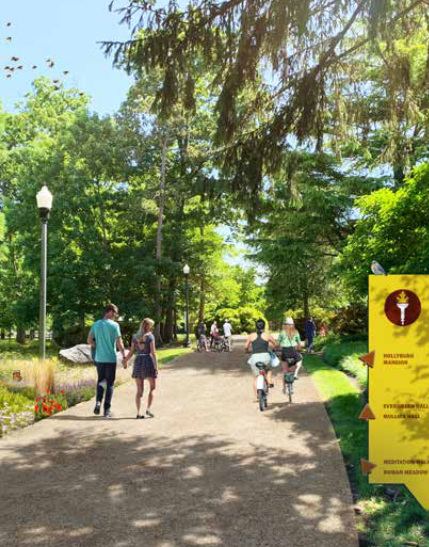
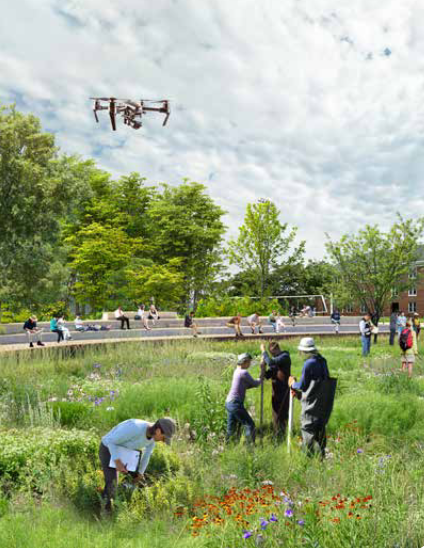
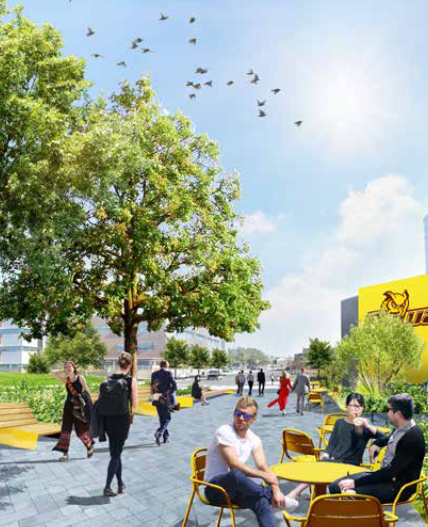
  • A rendering from the Rowan University 2025 Campus Master Plan.

    Rowan University’s impact on it’s surrounding area can’t be understated. Whether it’s gentrification fundamentally changing the way businesses and residents live their lives, or the influx of new students skyrocketing population growth, Glassboro wouldn’t be what it is today without it. 

    However, Rowan’s impact extends far beyond Glassboro’s economic growth. Rowan’s recent growth comes with a greater environmental footprint. 

    “This is the classic question of environmental debates,” said Garret Broad, Provost’s Fellow for Sustainability here at Rowan. “Can there be a sustainable economic growth? Can there be green growth?”

    Rowan’s campus isn’t completely environmentally destructive. Sarah Wright, an Associate Teaching Professor in the Department of Biological & Biomedical Sciences, outlined Rowan’s arboretum and gardens: a biologically diverse collection of thousands of woody plants across Rowan’s campus. 

    “The arboretum and gardens is our plant collection on the Glassboro campus, and it’s supported by students and faculty from all over the university,” said Wright. 

    It’s currently expanding, encroaching on lawns Wright describes as “biological deserts.”

    “Think about what a lawn actually is,” said Wright. “It’s kind of like a biological desert. I never want to say we shouldn’t have any lawns because humans use lawns. Like, we use them as gathering spaces on campus. But this particular lawn I’ve never seen anyone use. I’ve been here for seven years, no one goes out in it. No one plays in it. It’s just a big empty space, basically. And so we’re trying to convert it into something that’s a little more functional from an ecological perspective.”

    That includes conversion from a lawn to a meadow filled with plants native to South Jersey located behind the Science Hall. Wright not only hopes to create a nice meadow, but to pull the university away from pesticides and herbicides—highly toxic chemicals to humans, animals, and plants. 

    “If we put in a big meadow, we’re going to be doing a few different things,” said Wright. “We’re going to be irrigating less, and we’re going to be using fewer pesticides and fewer herbicides, and those sorts of things. If you really want to maintain a big nice show lawn, you have to use pesticides and herbicides, and we do that on campus to keep things looking a certain way. But the fewer areas on campus that do that, the lesser are impact and the more healthy the whole system can be.”

    A rendering from the Rowan University 2025 Campus Master Plan.

    Rowan recently released a sustainability master plan. This includes a detailed outline of Rowan’s environmental goals. 

    “There are huge developments on the west campus and also eventually on the south side of 322,” said Broad. “We’re going to see a lot of development in the coming years. All of these are going to be built with a from a much more energy efficient sustainable perspective.”

    The West Campus Development Project features a forested preserve on its south end. The planned Wellness Village is designed to shrink car dependency. Stormwater management aims to manage runoff, preventing flooding in the surrounding area. 

    Rowan hopes to replace brutalist, utilitarian infrastructure with infrastructure favoring environmental cleanliness and compatibility. Concrete is to be replaced with materials allowing water to seep into soil directly. And plants native to South Jersey—not invasive species—are mandated.

    Increasing green spaces and tree canopies helps lower local temperatures and energy loads, and pedestrian centric infrastructure improves walkability and limits congestion. 

    “If you read that document [the sustainability master plan], there are a lot of considerations of sustainability that are built into everything,” said Broad. “That’s just part and parcel of doing any sort of development or design in 2026 as opposed to, say, 1970 when a lot of this place was being built. That includes a lot of considerations around, not just buildings and energy efficiency, but also campus mobility.”

    Much of Rowan’s focus is on growth, but Broad hopes growth means greater efficiency. To him, greater efficiency implies greater environmental friendliness. 

    “I think the sweet spot is when development is sustainable, it tends to also be efficient,” said Broad. “Efficiency saves money and is also good for environmental quality. And so that’s really the lens that advocates for these issues push.” 

    A rendering from the Rowan University 2025 Campus Master Plan.

    Environmental health isn’t just an issue pushed by biologists or those empathetic for animals. It has serious impacts on public health, whether it relates to air quality, toxic waste, food quality, wildfire smoke, and so on. According to the Urban Institute, environmental health can even benefit upward economic mobility. 

    “You need to be appealing to people’s heads, to people’s hearts,” said Broad. “We also need to be designing environments so they don’t have to think or feel at all. It just makes it easier for you to, you know, bike around campus. As opposed to having all these barriers because there’s no place to park or you’re dodging traffic because there’s no bike lanes. Even if I really want to bike to campus or take public transit, these barriers might get in the way. If these barriers are strong enough, I’m not going to do it. That’s the real challenge.”

  • How activism has shifted with the Trump administration.

    Activists protest the Trump administration at the No Kings protest in Washington, D.C., on March 28, 2026. (Aidan Vanhoof)

    In late March, thousands flooded the Lincoln Memorial—some clad in neon costumes, a few hauling floats, most carrying signs labelled “NO KINGS”—to protest the Trump administration. 

    The incessant mass of people eventually made its way to the Washington Monument, creating a line stretching the length of the reflection pool. The sounds of drums and megaphones could be heard from one end to the other.

    While similar marches have precedent, activists lately feel they’re protesting for their own survival instead of specific subgroups, leading to modifications and new methods unheard of in past movements. 

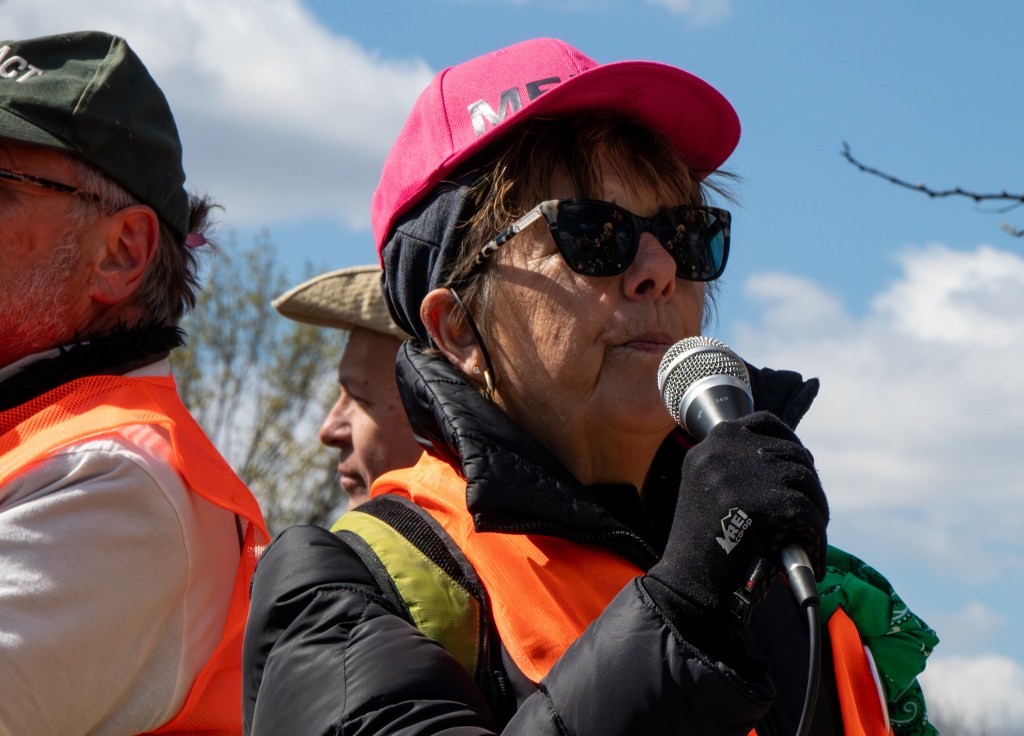
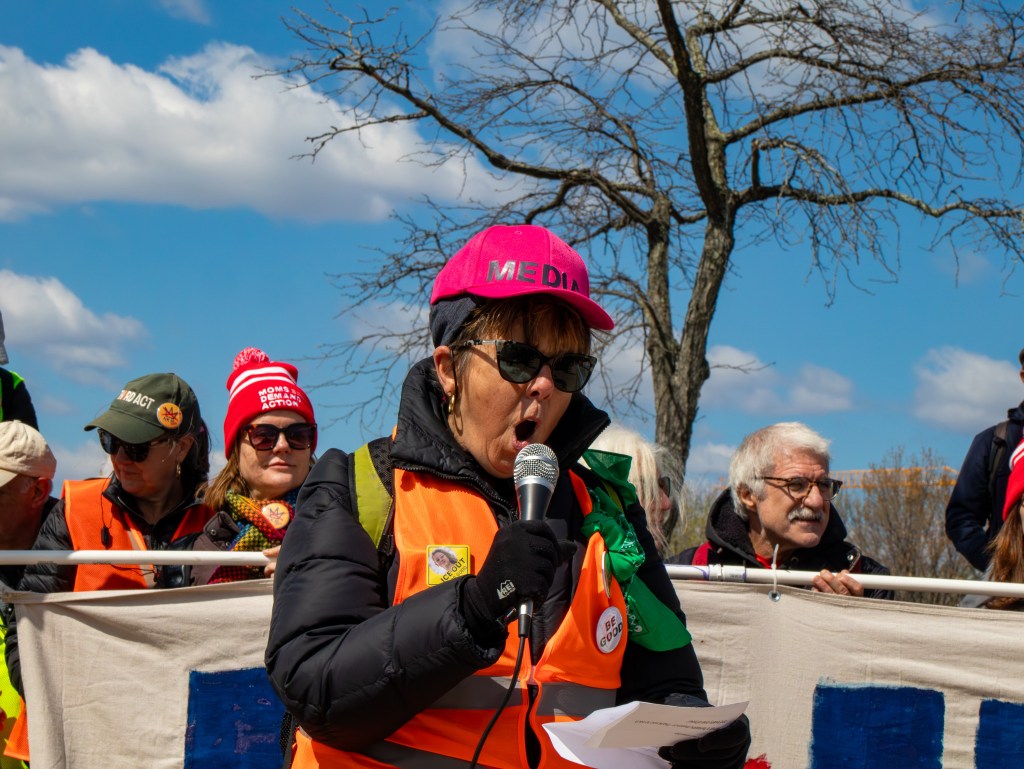
    “I think the number one thing that’s changed is the seriousness of what’s going on now,” said No Kings organizer and activist Susan Douglas. “Activists back in the early 70s were upset about the war. The Wall Street business, that was all about financial issues on Wall Street. What’s happening now is about a much larger problem. It’s the government at large and these minions you’ve seen really destroying our country, and it’s affecting everybody. It’s not just families who have to send sons off to war.”

    This march, like many before it, marked a period of intense public unrest. Recent policies from the Trump administration— mass deportations, severe detention conditions, wars in Gaza and Iran, and rapidly rising gas prices—have led to serious public backlash, at points culminating in violent clashes between citizens and law enforcement.

    Protestors make their way from the Lincoln Memorial to the Washington Monument during No Kings protests in Washington, D.C., on March 28, 2026. (Aidan Vanhoof)

    In response, organizers made special efforts to quell overly rowdy protestors. It takes just one person to push a confrontation with riot police, often bringing arrests and injuries

    They shift tactics according to their target and perceived urgency. Now, people aren’t solely protesting on behalf of others. Political agitation’s changed in places beyond just signs and megaphones, to the pulpit and to the canvas.

    Organizer Susan Douglas speaks to a crowd of protestors at the No Kings protests in Washington D.C. on March 28, 2026. (Aidan Vanhoof)

    According to Douglas, people’s approach to activism has modernized, especially with social media. 

    “We now have social media, we didn’t have social media before,” said Douglas. “So you get a lot of political memes. I think the art has become more sophisticated. It’s also across the nation, so you see different groups bringing their talents to the problem.”

    Social media has enabled people to communicate in ways that were impossible a decade ago, ushering in a newfound ease of mobilization. 

    Organizer Susan Douglas speaks at a No Kings rally held by the Washington Monument in Washington D.C. on March 28, 2026. (Aidan Vanhoof)

    To Douglas, greater stakes also bring greater solidarity. She used Minnesota’s protests against Operation Metro Surge as an example. 

    “Minnesota endured such brutality with the loss of several lives,” Douglas said. “Totally, totally horrendous, heinous acts. They showed us how to mobilize. They went out and day after day in 22 below zero weather, and stood out there and protected their neighbors. It’s not just about my son maybe going off to war, or my neighbors grumbling about gas prices. All of my neighbors are being affected, and we all have to step in to help the most affected.”

    The religious world

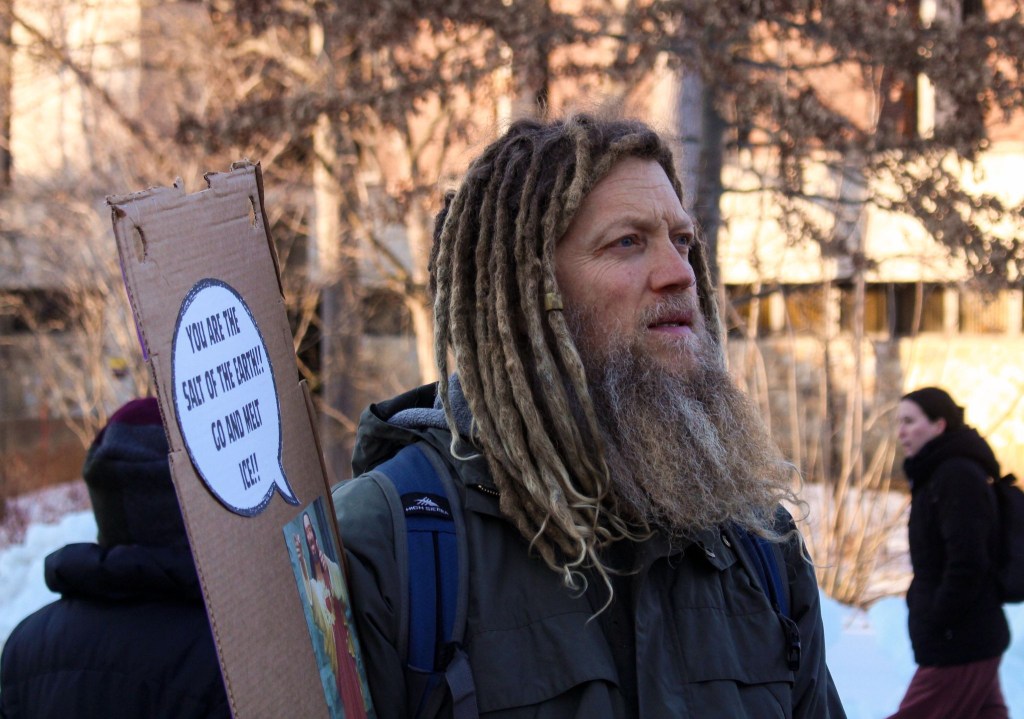
    Like Douglas, Randy Von Osten, a Pitman, NJ based pastor, has been an activist for decades. He had his start in 1998 with a march against poverty. Since then, he’s used his faith as a weapon against what he deems unjust, speaking at rallies, attending protests, and organizing aid for the vulnerable. 

    Pastor Randy Von Osten carries a sign at an anti-ICE protest at Rowan University in Glassboro, NJ, on March 9, 2026. (Aidan Vanhoof)

    To Von Osten, current events and spirituality are inseparable.

    “I was taught when I was in seminary that you’re supposed to preach with a Bible in one hand and a newspaper in the other. You’re supposed to preach where it’s relevant to the day… people of faith are supposed to respond to what’s happening.”

    Von Osten’s sermons have grown increasingly political in recent years, in part as a response to heightened political stakes. 

    “I think there’s more to preach about,” Von Osten said. “I mean, between the ICE stuff, the horror of the Epstein files. I think it just lends itself. I’m also more confident in myself and what I believe needs to be shared.”

    These politically charged sermons have invited some controversy, especially given Von Osten’s roots in the otherwise widely conservative Baptist Church.

    He belongs to a growing minority of progressive pastors and churches challenging conservative dogma. His church, the First Baptist Church of Pitman, had a pride banner posted for months this last winter. He claimed to be surprised it survived as long as it did.

    “I’ve become more controversial, or more open,” Von Osten said. “I feel so much conviction in order to speak the truth… it would be queer inclusion in the church, human rights for all people, everyone is welcome and everyone is loved and affirmed. I’ve gotten resistance for that.”

    The artistic world

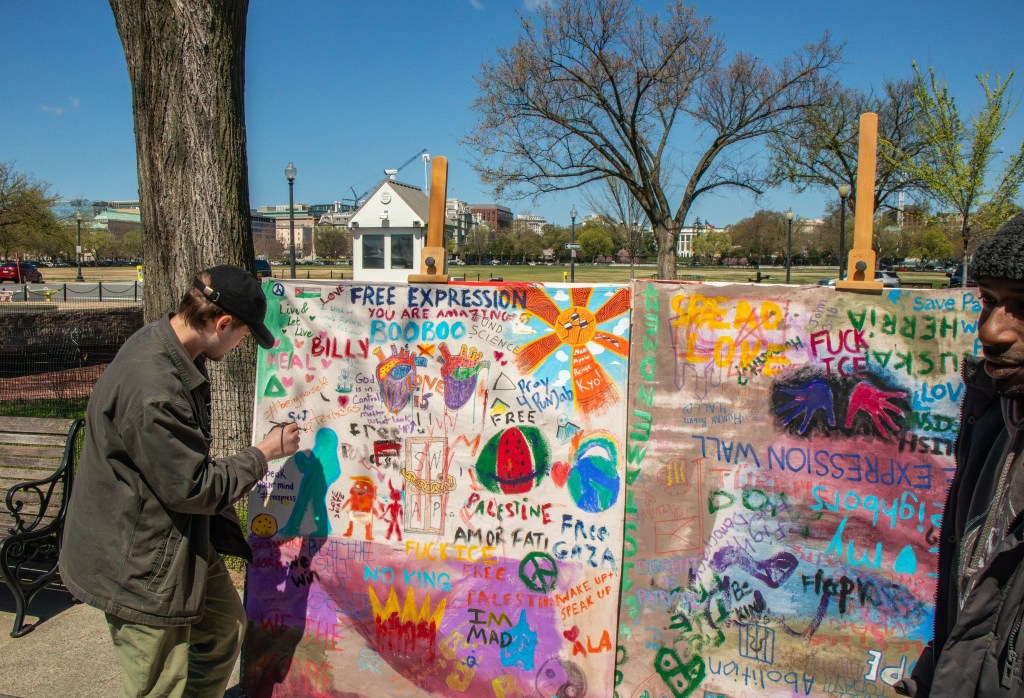
    On March 28, Maryland artist Mike McMullin set up a “free expression wall” featuring a view of the White House, where passing observers could pick up a brush and paint as they wished. Many wrote messages condemning ICE, calling for Palestinian liberation, and so on. Others simply drew watermelons, wrote words of encouragement, or painted smiling faces. 

    Artist Mike McMullen stands on a Washington D.C. sidewalk during the No Kings protests on March 28, 2026. (Nick DiCiccio)

    “It’s more of a reminder that free expression is still available,” said McMullen “We should exercise it just so that we can keep doing it. If we don’t exercise free expression, we’ll forget how to.”

    A man paints on artist Mike McMullen’s free expression wall on a Washington D.C. sidewalk on March 28, 2026. (Aidan Vanhoof)

    McMullen’s free expression walls have accompanied dozens of protests across several decades. Despite this, he’s increasingly cynical towards the impact art makes on the current administration.

    “To express yourself is healthy, whatever it is, and in this case it’s political frustration,” McMullen said. “You see all these signs that people paint. Very clever, very well done signs. These are good for us to feel that we have some common ground. But when it comes to making political change, with this group that we’re up against, I don’t think that they have the sensitivity to be touched by the artwork that can be made. I’m not sure that there’s an art piece that can sway the incredibly dense minds that we’re up against.”

    McMullen argues they serve as gateways to collective bonding, not purely as isolated modes of change. In turn, art and protest act as ways to maintain community health—not as literally persuasive forces—lending greater meaning to communal free expression walls like McMullen’s. 

    However, protesting does grab the Trump administration’s attention. 

    Protesting increases civic engagement and sways public opinion hugely, according to The Guardian. Just last October, President Trump posted a video to Truth Social depicting him raining feces from a plane onto No Kings protestors. It’s evidently not something the current administration ignores, despite their negative reaction.

    To provoke reactions like it, advocacy continues adapting, whether it’s progressive religious reform, artistic communal expression, or social media used to organize a march to the Washington Monument.

    “I think there’s just a deeper dedication, and a realization that we have to protect each other,” Douglas said. 

  • Aidan Vanhoof, Staff Writer

    March 25, 2026

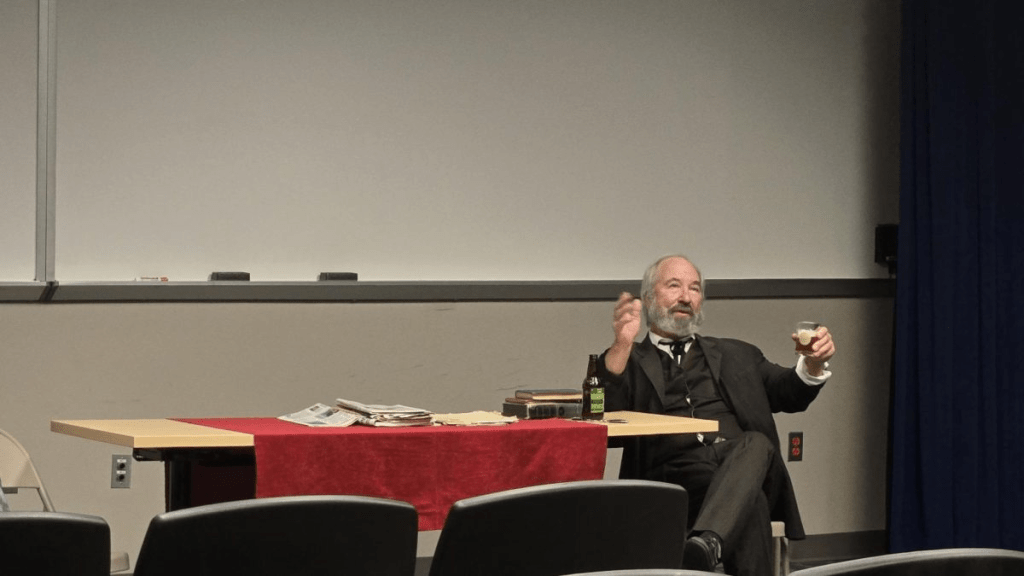
    Karl Marx came to Rowan in “Marx in Soho” by historian Howard Zinn, a one-man play that revives Marx to confront modernity. 

    It occurred on Mar. 11 at 6:30 p.m. in King Auditorium, Bozorth Hall, and continued until about 8:00 p.m., premised on one question: If Karl Marx were raised from the dead, what would he say? The play served as a monologue against the sins of the modern world, in defense of Marx, and against Marxism’s various misinterpretations and abuses. 

    “As someone actively involved in the organizing space, a lot of the criticism that organizers get is like, ‘these ideas aren’t relevant anymore.’ I think that’s something we’re constantly trying to battle, so I think it helps to communicate why they’re still relevant,” said Yuval Saar, a senior sociology major. 

    It wove heavy systemic and social commentary with a love story between Marx and his wife. The antagonist — Mikhail Bakunin, a 19th-century rival anarchist revolutionary, and the ever-present elite of the past and present. 

    “The heart of the message is the humanizing elements about his personal life and his family, and his children. But there are those moments where I can bring out Elon Musk blowing up billion-dollar rockets or Zuckerberg,” said Bob Weick, the play’s actor. 

    “Marx in Soho” is not a new play, nor is Bob Weick new to it. It was written by Howard Zinn in 1999. Bob Weick picked up the role in 2004. Since then, he’s been touring the world and updating the script to adapt to the modern age. Despite its age, Weick referenced I.C.E., tariffs, Artificial Intelligence, Trump, and so on.

    “Howard gave me permission to make adjustments to the play based on current events,” said Weick. 

    It was hosted by the Philosophy Club, Sociology and Anthropology Club, Rowan SJP, and Rowan Young Democratic Socialists of America. It had support from a coalition of various departments and student organizations, such as the Rowan Students for Justice in Palestine, Communication Studies, Political Science & Economics, Writing Arts, Theatre & Dance, and History. They managed to raise about $1150. 

    “We didn’t run into anything with the university. We have a lot of autonomy as student groups. It was just a lot of emails to a lot of different departments,” said Saar. 

    A Q&A session was held afterwards. While only about a third of the seats were filled, the reception was positive. 

    “I like it, I thought it was very necessary for the times,” said Dylan Adair, a sophomore accounting major.

    For comments/questions about this story, DM us on Instagram @thewhitatrowan or email Mackay55@rowan.edu

  • Aidan Vanhoof, Staff Writer

    February 11, 2026

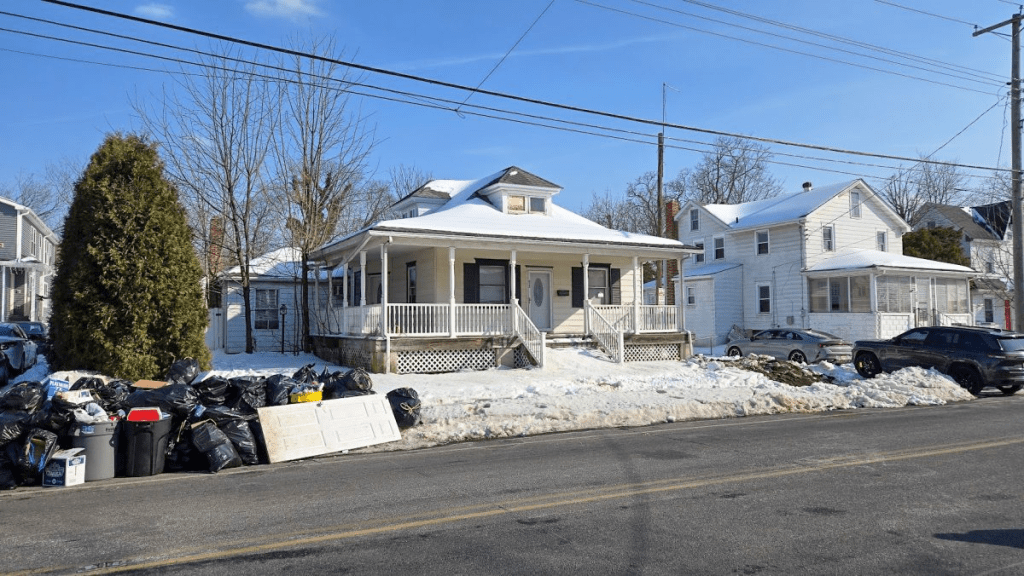
    The current house on 312 N. Main St. Wednesday, Feb. 4, 2026. Glassboro, N.J. (Staff Writer / Aidan Vanhoof)

    The current house on 312 N. Main St. Wednesday, Feb. 4, 2026. Glassboro, N.J. (Staff Writer / Aidan Vanhoof)

    A home by Rowan University is to be demolished and replaced with new student rental housing.  

    The Glassboro Planning Board unanimously approved the demolition of a home located at 312. N. Main St. to be replaced with a nine-bedroom, four-bathroom rental property, in a Jan. 6 meeting, according to real estate developer Elizabeth Quam. 

    The property is zoned for residential housing, specializing in student use. It will include parking for about 10 vehicles and a private driveway, in addition to dedicated recreation and basement spaces. In total, it will span approximately 4,200 square feet, not including the porch or second-story balcony.

    “They came before the board, did a very good job, and the board approved it,” said Clarke Pierpont, zoning officer for the Glassboro Planning Board.

    The number of tenants will likely match the number of bedrooms, due to lease agreement restrictions and a broad but newfound preference for singles, according to the Courier Post.

    A blueprint of the future home that will replace the current one on 312 N. Main St. (Elizabeth Quam)

    Rowan Boulevard brought a shift away from doubles, as apartments lining the boulevard were constructed, for the most part, as singles. Generally, students now seek greater privacy, unlike in Rowan’s past. As a result, it’s highly unlikely the new property will reach anywhere close to legal capacity, according to Quam. 

    The location was chosen for its proximity to Rowan and Glassboro’s downtown area.

    “The majority of my tenants are Rowan students,” said Quam. “What I try to do is have places that are conveniently located to, not only the school itself, but some of the stores and places students often walk to. North Main has been a very nice location for others. And this property is right between two other properties I own.”

    Despite its proximity to Rowan, there was very little comment from University Housing officials regarding the project.

    “The project at 312 N. Main Street is not something that University Housing is involved in,” said Barry Hendler, the assistant dean of residential learning and university housing.

    Quam, who once upon a time was a Rowan student herself, does not plan on developing further student housing. 

    “We do have a couple more renovation projects,” said Quam. “But the new ordinance that they passed in this past year has upped the cost greatly to where, financially, I don’t think it makes sense to be able to do what we’ve been able to do in the past.” 

    These regulations, which regulate parking, landscaping, and home design, are in place to ensure houses can adequately facilitate residents. 

    “The main design controls are there to ensure there’s adequate parking, landscaping, and things like that for the home so that it’s not an inconvenience for the neighbors or the residents who end up living there,” said Pierpont. 

    For comments/questions about this story, DM us on Instagram @thewhitatrowan or email ottoch32@rowan.eduView Story CommentsLike This Story

  • I would like to cover Vineland’s reaction to new A.I. data centers. Recently, there has been bipartisan outcry against new data centers among Vineland locals, culminating in a council meeting that lasted several hours. However, despite public opposition, the data center was pushed through. I would like to explore how the community has reacted to this change, and if this has affected their trust in local representatives.

  • Aidan Vanhoof

    “You know, I’ve seen people turn into kids again.”

    In 2015, Dan McDevitt, a Deptford High School graduate, decided to post his party’s invitation to Facebook, not realizing it meant over 123 people would show up. This party, a reunion of old high school friends, took inspiration from local Catholic schools’ high school reunions, wherein long-lost friends reunited, and new lifelong friends could be created. 

    Deptford High School, to some degree, has had some.  But, to McDevitt, constrained by regulations, they lacked soul. They lacked the frenzied energy McDevitt’s teenhood “keggers” exuded. And they lacked precisely the energy McDevitt sought to replicate. 

    “I said, well, after 2 years, ‘what are the rules?’ Everyone’s like, ‘you don’t want to do that,’” McDevitt said, angling his hands parallel to depict an endless list. “If I were to do the official school event as the board of education says, they’d be like, ‘here’s your rules and stuff you can’t do.’”

    Early on, McDevitt gained experience hosting parties. Growing up in the 1970s, friends and neighbors dubbed him the “king” of house parties; his home, a social hub for neighborhood kids and adults alike. Later, he helped host concerts, revealing a talent for crowd control. 

    “As a child, I was the king… my brother had him and his friends come. My sister had all of her friends go. And then I got mine. It was a different time. The whole neighborhood showed up,” McDevitt said. 

    Following graduation, rifts between friends widened. Keeping up while maintaining jobs, families, relationships, etc., demanded an explicit reason to do so. Such a party seemed like a perfect solution. 

    The idea emerged in the early 90s, but it took another 20 years to realize. It all started in 2015, prompting an ongoing and ever-expanding tradition. 

    Now, he holds them yearly, wielding a small team of organizers and drawing dozens of attendees. 

    “Every year has its own little, ‘did that happen? Did they get married?’” McDevitt said. “They start all quiet. Two years later, they’re out dancing. A whole social life started with that event.”

    The next event will be held on October 3rd, 2026 at 4 p.m. at Spartans at the Elks.

  • Aidan Vanhoof, Staff Writer

    February 11, 2026

    The inside of the Glassboro Municipal Building. Tuesday, March 25, 2025. Glassboro, N.J. (News & Photography Editor / Christopher Otto)

    The inside of the Glassboro Municipal Building. Tuesday, March 25, 2025. Glassboro, N.J. (News & Photography Editor / Christopher Otto)

    Glassboro residents expressed fears for road and pedestrian safety amid icy conditions at the most recent borough council meeting. 

    The meeting, held on Feb. 10, 2026, at the Glassboro Municipal Building, began with Mayor John E. Wallace III presenting Lieutenant Charles Williams of the Glassboro Police Department and record-keeper Melissa Rovin with Years of Service Awards. Williams had 25 years of service under his belt, while Rovin had 36. 

    “Those are two impressive careers. You both will be sorely missed, and again, thank you both for your dedication to our residents of the fine borough of Glassboro,” Wallace said. 

    Following the mayor’s presentation, the council held a public hearing to approve a new stormwater management agreement from Atlantic City Electric Company, which passed without comment. The council then approved a series of resolutions, including the authorization of the release of a safety and stabilization guarantee of $23,680.02 for QC South Storage as well as a performance guarantee of $63,435 upon the posting of a required maintenance bond, the authorization of the release of administrative fees for Loud Wellness, LLC under the recommendation of borough Chief Financial Officer (CFO) Karyn Paccione, and the authorization of the execution of post-construction compliance forms for solar projects located on landfills and contaminated sites.

    The council then introduced Ordinance 26-05, which authorized a 20-foot easement for Glassboro resident John R. Defronzo. A public hearing is to be held at the next council meeting on Feb. 24. The council also tabled Ordinance 26-06, which amends existing rules to remove residency requirements for the Administrator Position.

    Following these approvals, council members thanked city employees, emphasizing their snow removal efforts. 

    “Obviously, the storm is pretty unprecedented in the last 20 to 30 years,” said Democratic councilman Andrew Halter. “We haven’t really seen anything like it, especially with the ice and impact. But they continue daily to clear up intersections and crosswalks and things like that, evidenced by their new emerging mountain. Thanks to all the work of all the employees around because of what they’re doing to keep our borough open.”

    The public portion of the council meeting then began, where Glassboro resident Cherie Bishop-Sinor discussed snow removal with the council. In an area with heavy pedestrian traffic, uncleared sidewalks pose a significant danger —especially to students. Bishop-Sinor proposed greater ordinance enforcement and reform as a solution.

    “I think it’s time for some new ordinances,” Bishop-Sinor said. “You know this was an odd storm to get, but it shed a light on issues, so there’s a responsibility of this borough to make sure that the children who are walking to school to and from are safe.”

    Bishop-Sinor then expressed concerns for driver safety, citing running red lights and past accidents at the intersection of Delsea Drive and Donald Barger Blvd as evidence. She offered an increase in dedicated left-turn signals, enhanced enforcement, and new control measures like cameras, as potential solutions.

    “Problem intersections are being addressed by the county and the state,” Wallace said. 

    Another speaker, Sean Feeny, a Glassboro resident, also cited minimal snow removal efforts beyond main roads. 

    “Areas that need access to sidewalks or are dirt trails or anywhere in between, a lot of those have been overlooked, especially in regard to private land,” Feeny said. “I think that I should call on our ordinance people to increase accountability for not just the tenants, but also the landowners.”

    The mayor stated Glassboro is doing the best it can, as it cannot encroach on state or county roads, meaning some may remain unplowed.

    Then, Lynda Gallashaw, a Glassboro resident claiming to represent the Glassboro Civic and Cultural League, cited multiple concerns: Glassboro’s recognition of Black History Month, a park bathroom construction project at Elsmere Park, which is located at 275 Higgins Drive, budget and tax concerns, and new marijuana dispensaries opening.

    “Could you enlighten me on what the council or the borough has planned for Black History Month?” Gallashaw said. “We’re now on day 10, and I have not seen anything posted that the borough’s doing for Black History Month.”

    Wallace cited educational programs, council members’ personal celebrations, and the borough’s official recognition of Black History Month in response. 

    Additionally, a bathroom to be installed at Elsmere Park will be made of wood, even though, according to Gallashaw, brick has both greater durability and cost-efficiency. She has brought this issue to the council twice before. Despite this, the mayor stated they are “moving ahead in full.” Finally, she complained of increasing taxes. Wallace stated that while taxes were increased to rebuild surplus, any increases would have been by cents.

    Gallashaw also found the high concentration of fast-food and marijuana dispensaries concerning. The council cited a legal limit of two dispensaries and a lack of interest in sit-down restaurants in response. 

    “To say we’re full of fast food and marijuana, I’m going to have to disagree,” Wallace said. 

    The public portion ended at 7:42 p.m., and the council wrapped up the meeting with their closing remarks.

    “We want to encourage you, please come out and entice everybody to come here tonight,” Wallace said. “I encourage you to come out and stay involved. To those of you that came up here and spoke this evening, thank you. Please continue to do so.”

    For comments/questions about this story, DM us on Instagram @thewhitatrowan or email ottoch32@rowan.edu