How activism has shifted with the Trump administration.
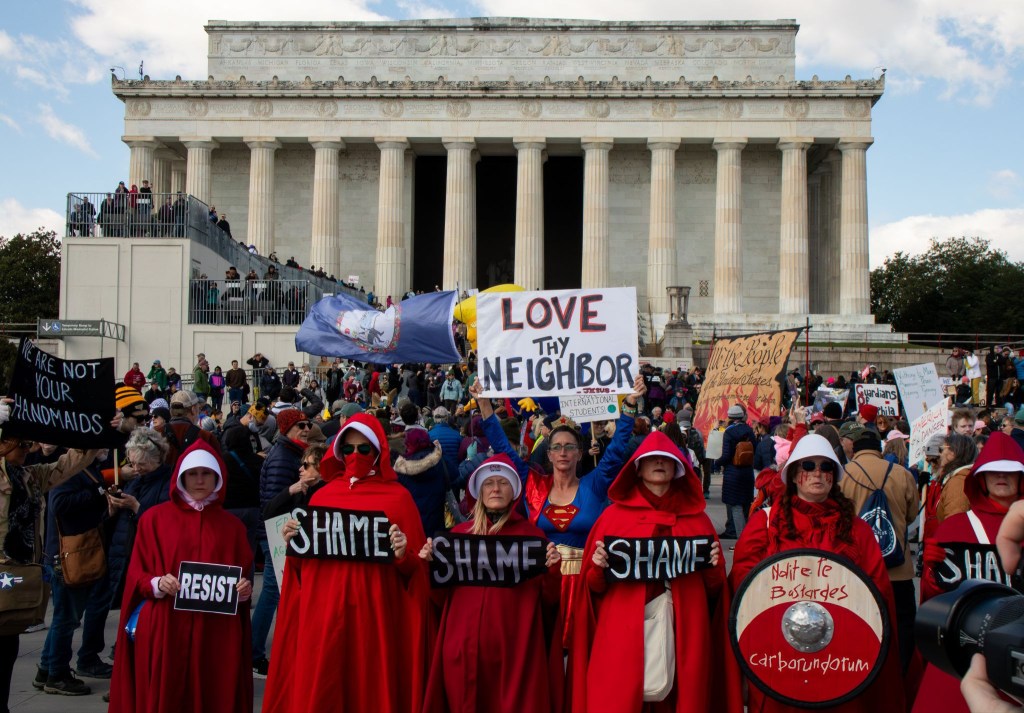
In late March, thousands flooded the Lincoln Memorial—some clad in neon costumes, a few hauling floats, most carrying signs labelled “NO KINGS”—to protest the Trump administration.
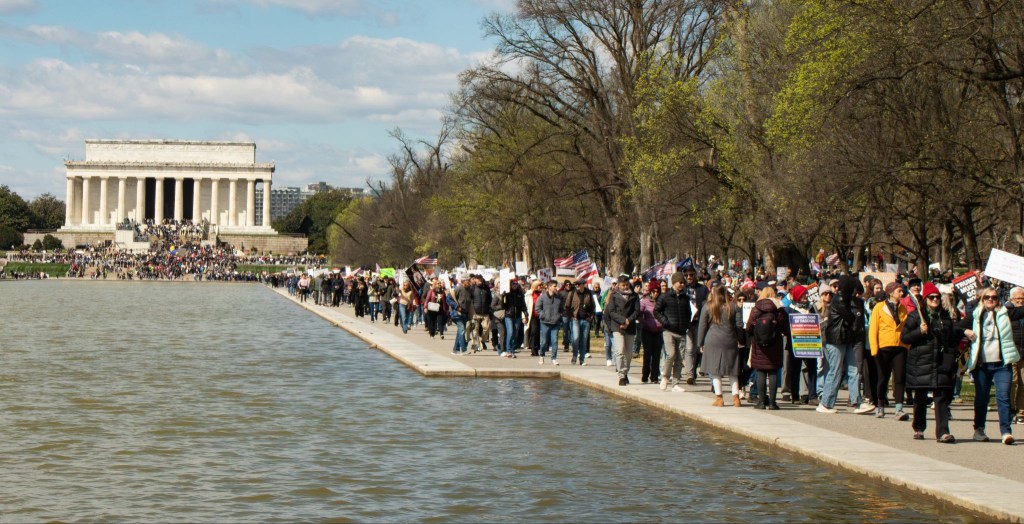
The incessant mass of people eventually made its way to the Washington Monument, creating a line stretching the length of the reflection pool. The sounds of drums and megaphones could be heard from one end to the other.
While similar marches have precedent, activists lately feel they’re protesting for their own survival instead of specific subgroups, leading to modifications and new methods unheard of in past movements.
“I think the number one thing that’s changed is the seriousness of what’s going on now,” said No Kings organizer and activist Susan Douglas. “Activists back in the early 70s were upset about the war. The Wall Street business, that was all about financial issues on Wall Street. What’s happening now is about a much larger problem. It’s the government at large and these minions you’ve seen really destroying our country, and it’s affecting everybody. It’s not just families who have to send sons off to war.”
This march, like many before it, marked a period of intense public unrest. Recent policies from the Trump administration— mass deportations, severe detention conditions, wars in Gaza and Iran, and rapidly rising gas prices—have led to serious public backlash, at points culminating in violent clashes between citizens and law enforcement.
In response, organizers made special efforts to quell overly rowdy protestors. It takes just one person to push a confrontation with riot police, often bringing arrests and injuries.
They shift tactics according to their target and perceived urgency. Now, people aren’t solely protesting on behalf of others. Political agitation’s changed in places beyond just signs and megaphones, to the pulpit and to the canvas.
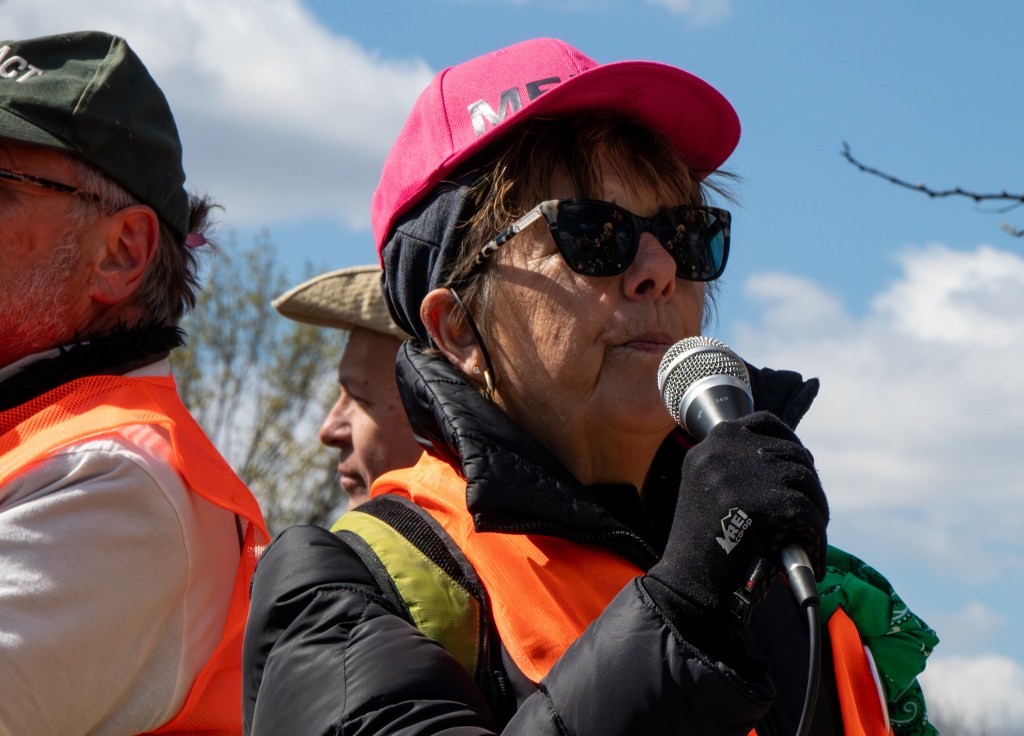
According to Douglas, people’s approach to activism has modernized, especially with social media.
“We now have social media, we didn’t have social media before,” said Douglas. “So you get a lot of political memes. I think the art has become more sophisticated. It’s also across the nation, so you see different groups bringing their talents to the problem.”
Social media has enabled people to communicate in ways that were impossible a decade ago, ushering in a newfound ease of mobilization.
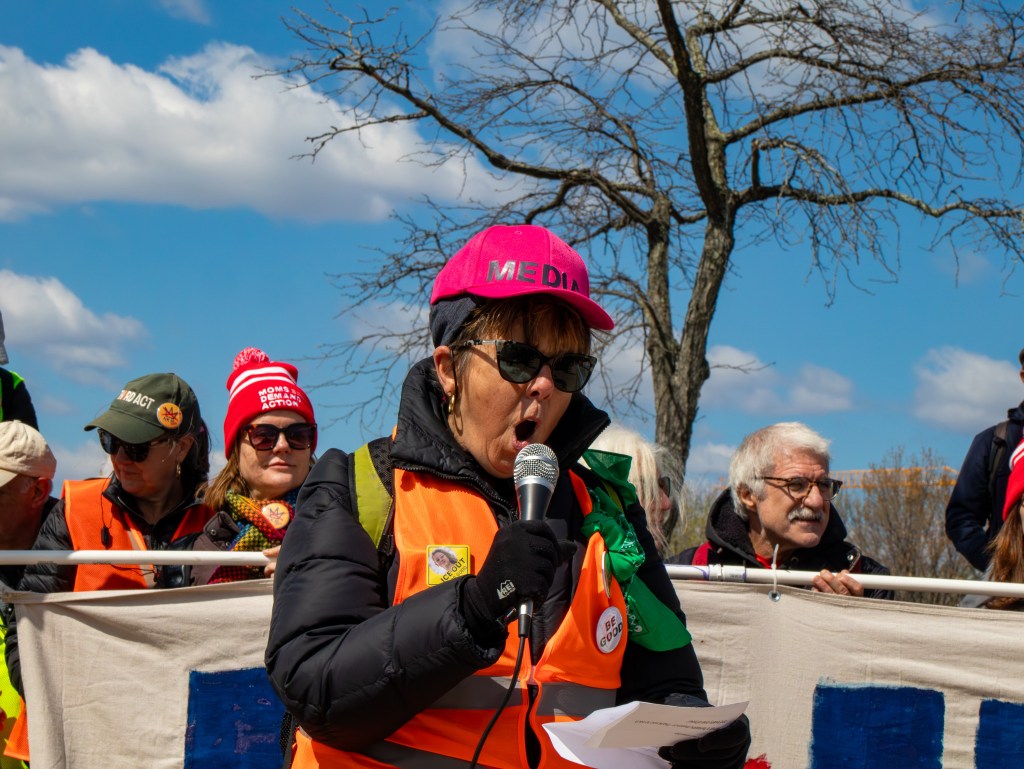
To Douglas, greater stakes also bring greater solidarity. She used Minnesota’s protests against Operation Metro Surge as an example.
“Minnesota endured such brutality with the loss of several lives,” Douglas said. “Totally, totally horrendous, heinous acts. They showed us how to mobilize. They went out and day after day in 22 below zero weather, and stood out there and protected their neighbors. It’s not just about my son maybe going off to war, or my neighbors grumbling about gas prices. All of my neighbors are being affected, and we all have to step in to help the most affected.”
The religious world
Like Douglas, Randy Von Osten, a Pitman, NJ based pastor, has been an activist for decades. He had his start in 1998 with a march against poverty. Since then, he’s used his faith as a weapon against what he deems unjust, speaking at rallies, attending protests, and organizing aid for the vulnerable.
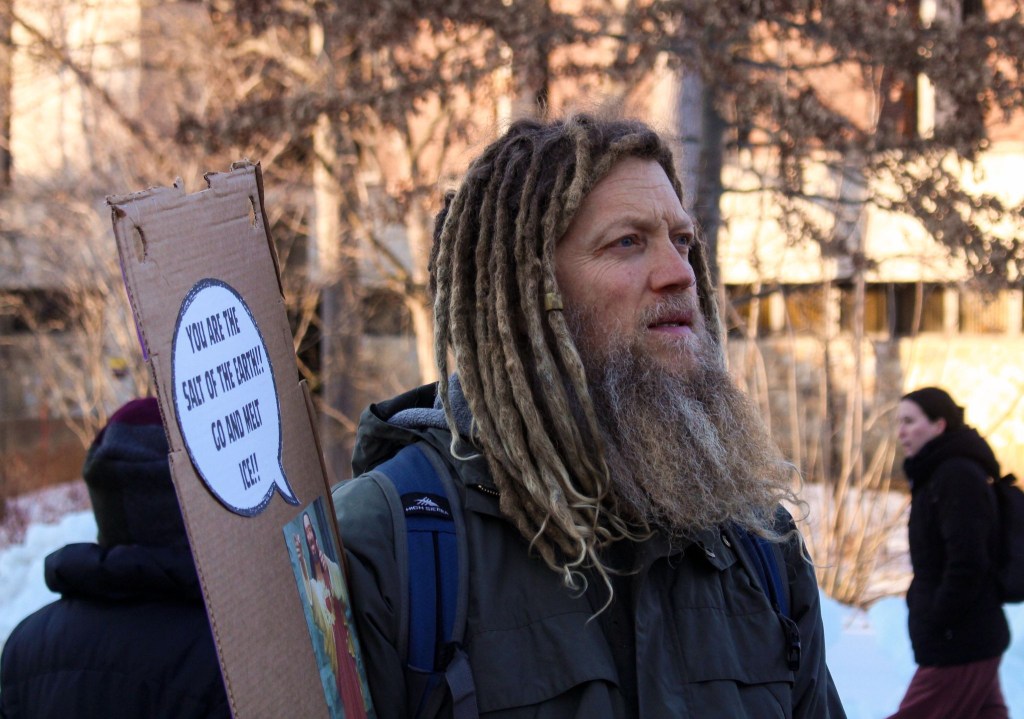
To Von Osten, current events and spirituality are inseparable.
“I was taught when I was in seminary that you’re supposed to preach with a Bible in one hand and a newspaper in the other. You’re supposed to preach where it’s relevant to the day… people of faith are supposed to respond to what’s happening.”
Von Osten’s sermons have grown increasingly political in recent years, in part as a response to heightened political stakes.
“I think there’s more to preach about,” Von Osten said. “I mean, between the ICE stuff, the horror of the Epstein files. I think it just lends itself. I’m also more confident in myself and what I believe needs to be shared.”
These politically charged sermons have invited some controversy, especially given Von Osten’s roots in the otherwise widely conservative Baptist Church.
He belongs to a growing minority of progressive pastors and churches challenging conservative dogma. His church, the First Baptist Church of Pitman, had a pride banner posted for months this last winter. He claimed to be surprised it survived as long as it did.
“I’ve become more controversial, or more open,” Von Osten said. “I feel so much conviction in order to speak the truth… it would be queer inclusion in the church, human rights for all people, everyone is welcome and everyone is loved and affirmed. I’ve gotten resistance for that.”
The artistic world
On March 28, Maryland artist Mike McMullin set up a “free expression wall” featuring a view of the White House, where passing observers could pick up a brush and paint as they wished. Many wrote messages condemning ICE, calling for Palestinian liberation, and so on. Others simply drew watermelons, wrote words of encouragement, or painted smiling faces.
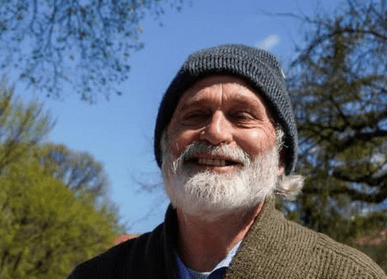
“It’s more of a reminder that free expression is still available,” said McMullen “We should exercise it just so that we can keep doing it. If we don’t exercise free expression, we’ll forget how to.”
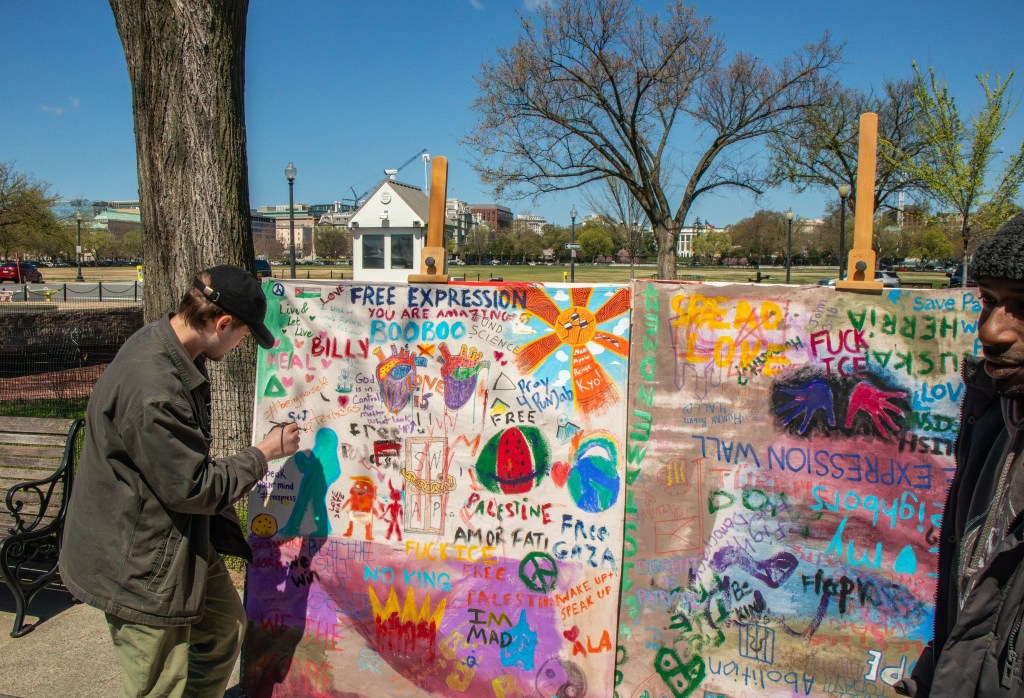
McMullen’s free expression walls have accompanied dozens of protests across several decades. Despite this, he’s increasingly cynical towards the impact art makes on the current administration.
“To express yourself is healthy, whatever it is, and in this case it’s political frustration,” McMullen said. “You see all these signs that people paint. Very clever, very well done signs. These are good for us to feel that we have some common ground. But when it comes to making political change, with this group that we’re up against, I don’t think that they have the sensitivity to be touched by the artwork that can be made. I’m not sure that there’s an art piece that can sway the incredibly dense minds that we’re up against.”
McMullen argues they serve as gateways to collective bonding, not purely as isolated modes of change. In turn, art and protest act as ways to maintain community health—not as literally persuasive forces—lending greater meaning to communal free expression walls like McMullen’s.
However, protesting does grab the Trump administration’s attention.
Protesting increases civic engagement and sways public opinion hugely, according to The Guardian. Just last October, President Trump posted a video to Truth Social depicting him raining feces from a plane onto No Kings protestors. It’s evidently not something the current administration ignores, despite their negative reaction.
To provoke reactions like it, advocacy continues adapting, whether it’s progressive religious reform, artistic communal expression, or social media used to organize a march to the Washington Monument.
“I think there’s just a deeper dedication, and a realization that we have to protect each other,” Douglas said.


Leave a comment