• Aidan Vanhoof, Contributor

    September 24, 2025
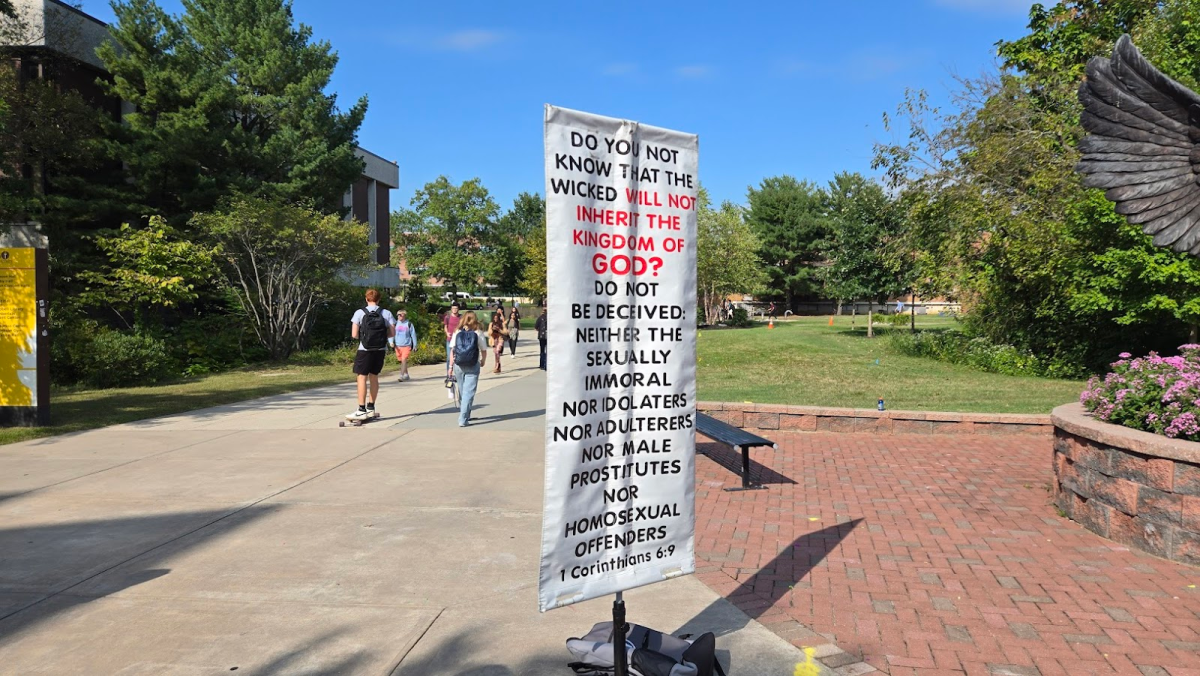
    A sign held up by a brother in front of the Rowan Owl statue. (Aidan Vanhoof).

    A sign held up by a brother in front of the Rowan Owl statue. (Aidan Vanhoof).

    In front of Savitz Hall, right by the Rowan Owl statue, like clockwork, two brothers wielding well-worn Bibles preached, hoping to save as many students as possible. Signs with Bible verses in bold black and red text towered nearby. According to them, the end is near, and God’s judgment is approaching. 

    Later that day, by the traffic circle, a microphone projected a man’s voice. At his feet, a sign sat on one side and a speaker on the other. His name is Roy Nembhard, and he comes to Rowan once a week to spread the Christian faith. 

    “I want to plant a seed, to get it out there so they may remember something I may have said…That’s part of how God opens the door,” Nembhard said.

    These three men, and many others dotting the campus, aren’t tied to any major organizations or denominations. They’re united only by conservative theology and a profound desire to spread the word of God.

    “A lot of students are outside of Christ,” Nembhard said.

    According to Nembhard, college students are impressionable and open to ideas and concepts they may otherwise avoid with age. To him, Gen Z needs it more than anyone, having grown up with constant access to social media and the internet.

    “When you condition a generation not to care…everything becomes hopeless,” Nembhard said.

    As he preached, some students passed by and cursed, and others praised his work. To Nembhard, ignorance drives his critics, while those who praise him know the truth.

    “You’re going to get some that agree and some that don’t agree… They criticize the Bible, but most of them have never opened the Bible,” Nembhard said.

    But ignorance might not explain everything. Attacking a person’s lifestyle, regardless of ignorance, will bother them. Preachers preach homophobic ideas very publicly or outside LGBTQ+ events, compounding the prejudice many students already endure. 

    “We’ve had a number of students that have complained to say they don’t like what’s being said, or don’t like what’s on their side,” said Dean of Students Kevin Koett.

    Jay Turner, a senior geology major, found the preachers with megaphones and speakers noisy and disruptive. 

    “The one with the megaphone is disruptive enough [that] I can hear him from my apartment since we keep the windows open,” Turner said. 

    Claims that preachers single out and harass students are commonplace. And according to Koett, incidents of physical contact and threatening language, while rare, have occurred. 

    As a result, some students seek help from Rowan’s administration.

    “We want to hear their concerns…even if I can’t say that’s a violation of the law or that’s harassment or that’s discrimination, there might be things that we could do to help support students,” Koett said.

    Rowan University is a public institution. Unless preachers issue threats, attack people, or disrupt university functions, they can’t be forced out.  

    “People have the right to say what they want,” Koett said.

    Despite this, a few students are openly disdainful, even aggressive, towards them. For example, the brothers by the owl statue had a student steal their sign and rip it in half on Monday. One student kicked over their sign, then power-walked away. Another thanked God once they learned that preachers aren’t affiliated with Rowan. 

    “It feels like it could be perceived that they are attacking them,” said Ellie Grant, a senior computing informatics major. 

    Grant is a Christian who appreciates their presence and the messaging, but critiques their intensity.

    “Personally, as a Christian, I love seeing the word of God being spread on campus… but I think their approach could be refined in some ways in talking to students,” Grant said.

    Grant doesn’t mirror all Rowan Christians. Sympathetic students shake preachers’ hands, bless them, and know them by name. And Grant remains supportive of their mission; she only criticizes their methods.

    “In essence, I do believe it is wonderful that they are spreading the word of God, and trying to, you know, really connect with students,” Grant said.

    But for students who have any feelings of uncertainty surrounding the campus preachers, there are resources provided by the school that may be able to help. Reporting any concerns and seeking support is encouraged, even if it doesn’t lead to legal action. 

    For comments/questions about this story, DM us on Instagram @thewhitatrowan or email features@thewhitonline.com
  • Aidan Vanhoof, Contributor

    September 24, 2025

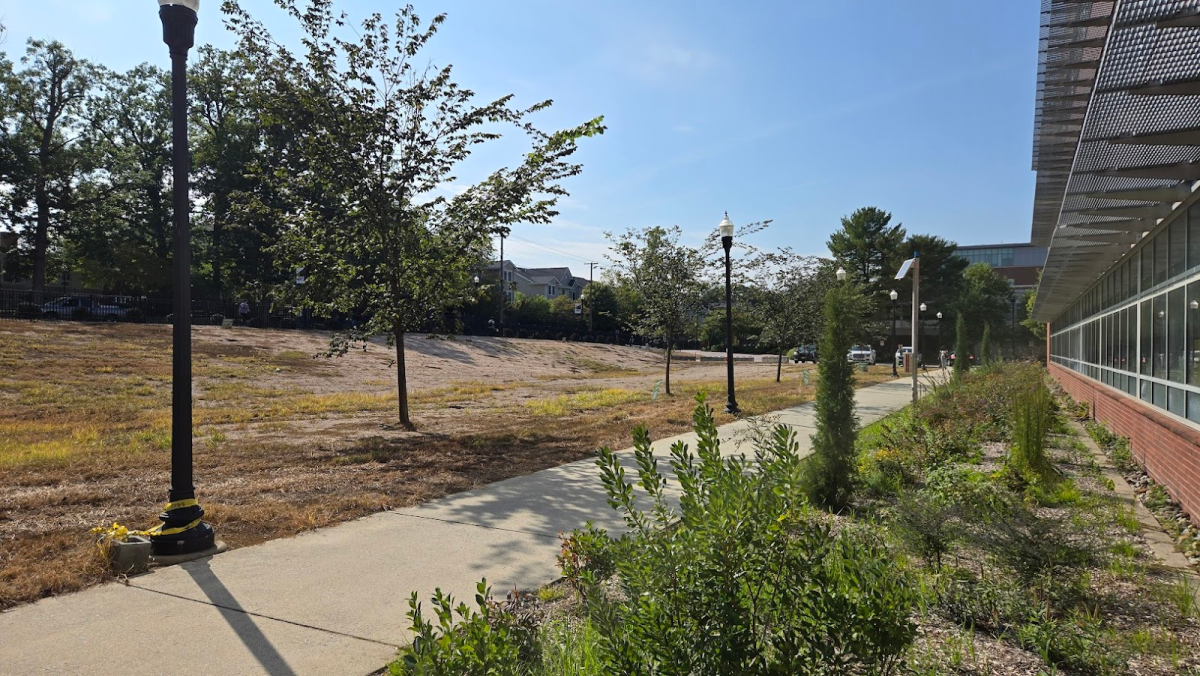
    The garden and plain behind the science hall. (Aidan Vanhoof).

    The garden and plain behind the science hall. (Aidan Vanhoof).

    Behind the Science Hall is a swath of barren, almost deserted land. Grass isn’t growing; in fact, all that remains is hay. Dried-out foliage litters the exposed soil, in stark contrast with the perfectly manicured lawns everywhere else. 

    However, this dead landscape serves to create life.

    Dr. Stephen Bentivenga, the department head of biological and biomedical sciences, and the department chair, Dr. Michael Grove, will work alongside landscapers, students, and organizations to fill this space with a “native plant meadow” over the next few years, according to a Rowan Announcer.

    In the long run, the duo aims to replace parts of Rowan’s otherwise clean-cut campus with a more natural, less curated appearance.

    “Let’s plant [on] things that used to be or currently are just lawn. Let’s turn it back into … [a] more native habitat,” Grove said.

    This fits into a broader project called Homegrown National Park. The initiative stresses changing the way we landscape in ecological ways to promote biodiversity and healthy habitats. Unlike native plant life, grassy lawns, while they’re green, don’t emerge naturally, and constant maintenance with fertilizer, mowing, etc., hurts biodiversity. Few animal and insect species thrive, and many species of grass can be invasive, even damaging, to their surrounding environment. 

    “It’s essentially from an ecological perspective … a desert,” Grove said. 

    Grove specifically referenced some here at Rowan. To him, sprawling lawns represent untapped potential.

    “We really want them to be native plants. Because of their coevolution with the native insect species, native bird species… they are so much stronger. They’ve had this long evolutionary history together.” Grove said.

    Ideally, the introduction of plants native to South Jersey will bring in more native animals and insects. Pollinators, for example, are needed, as their populations continue to decline, in part due to the introduction of non-native species. This project aligns with Rowan’s ongoing goal to cultivate a more sustainable, ecologically friendly campus. 

    According to Dr. Bentivenga, we should see serious progress within the next few years.

    “The native meadow will likely take several growing seasons to become established,” Bentivenga said over email.

    The meadow will be arranged both for educational purposes and to be enjoyed as a place to study, teach, and explore. 

    “There’s a bunch of ways we could use this space,” Grove said.

    They will set up clear spaces, plaques, and benches. Grove described a literature class teaching Shakespeare in a flower meadow with students studying or socializing at its center. The Rowan Announcer proposes “a living laboratory for students and visitors.” The project’s funding came from a grant. According to Grove, they’ve spent close to $3,500 and planted over 300 plants. 

    “It’s like there’s a bunch of ways we could use this space. I think somewhat for our classes. You know, if somebody wants to bring their literature class out here and read through Shakespeare or something,” Grove said. 

    Despite constant maintenance, weeds are an ongoing problem. Currently, the meadow is just a small sliver of garden up against the Science Hall; much of it is nut grass and crab grass, but blooming flowers and bushes draw attention away from the weeds. He went on to describe how some clubs and organizations may contribute to weeding, planting, and maintenance efforts. 

    “It was a bunch of student help … There was definitely student help because we had reached out to the clubs,” Grove said.

    Beyond the Science Hall, biodiversity efforts are dispersed across campus. By the softball field, a meadow, which neither Bentavenga nor Grove knew about, has been established, featuring signs warning against mowing. The bridge used to enter Robinson Hall crosses a stream surrounded by thick, green plant-life. The biodiversity found there is new and deliberate.

    “If you look at their strips in the parking lots, they’re actually pretty densely planted. Actually, some of the stuff on the other side of Robinson, right where that bridge is … all that stuff has been put in the last, I want to say, 5 years,” Grove said.

    Referring to the project behind the Science Hall, students say, while its current state isn’t pretty, the result makes it worth it.

    “I would say in its current state, this is ugly. [But] they’re actively working towards making it a nice spot for the campus, so I’m fine with it being in its very clear growing stage,” said senior music technology major Matthew Farmer.

    While this bald spot on an otherwise lively campus may not be pretty, it will grow into something substantial and beautiful, contributing to an overall more ecologically friendly and diverse campus experience. 

    For comments/questions about this story, DM us on Instagram @thewhitatrowan or email features@thewhitonline.com
  • Aiden Vanhoof, Contributor

    September 17, 2025

    Another article I wrote for Rowan’s school newspaper, The Whit.

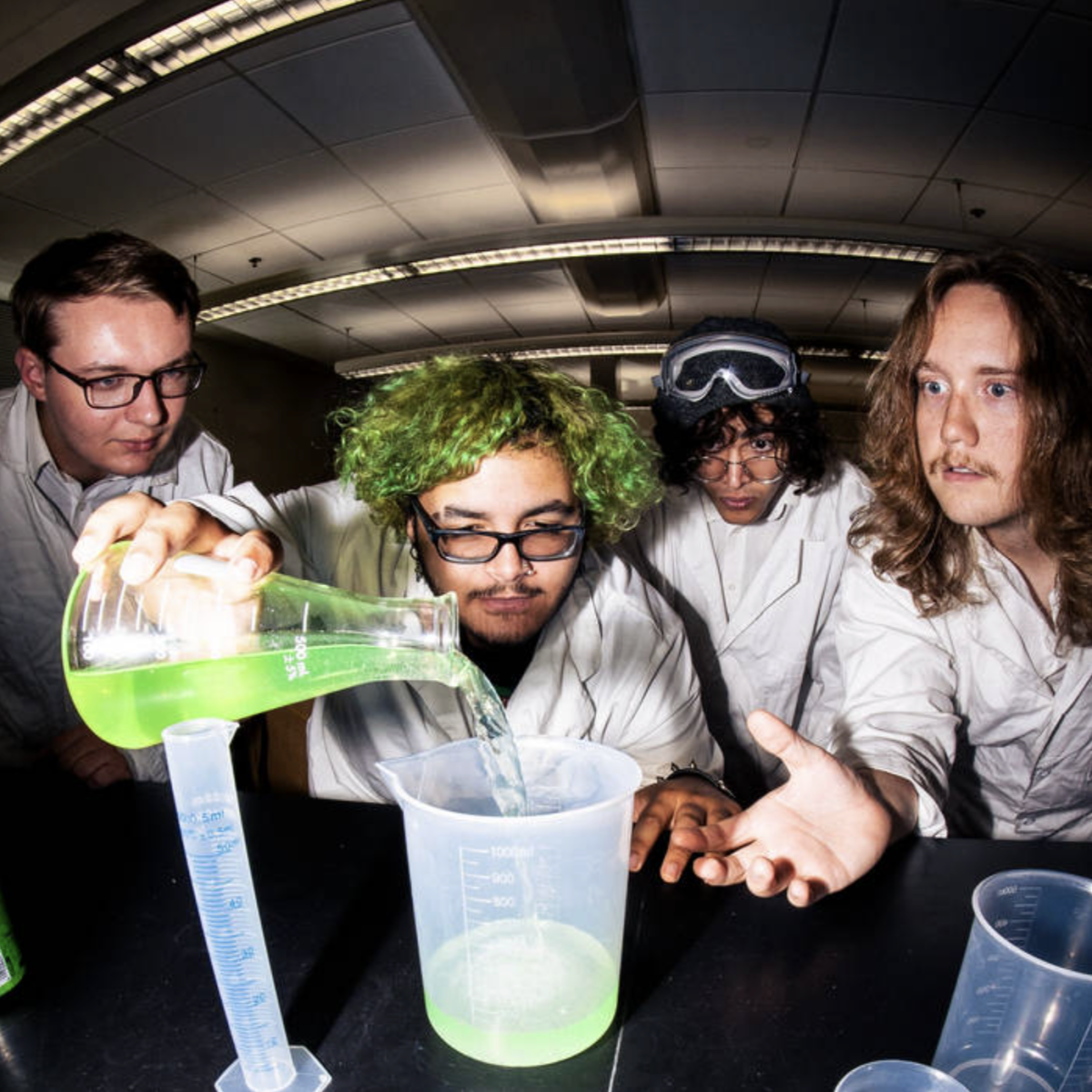
    “All of our songs have a story,” said Darischuk. (@mcintyr3.media on Instagram)

    “All of our songs have a story,” said Darischuk. (@mcintyr3.media on Instagram)

    Glassboro’s music scene, and by extension Rowan’s, is thriving, with a heavy focus on hardcore and punk music. In this sea of noisy guitar riffs and rapid drum beats, one band seems to stand out: Estrogents. 

    They’ve played all over southern New Jersey, as well as parts of Pennsylvania, continuing to expand beyond their roots as a high school band born of boredom and into a serious live act with a solid recorded catalog. 

    The band began in middle school with two members—Dee Philips and Grey Hobbs—but by high school, Jack Darischuk joined on lead guitar and vocals, and Mike Redd on rhythm guitar. 

    For a time, they were The Stains, but other bands had taken that name beforehand, pushing them to change it.

    “In the beginning of middle school, I was a vegetarian, so I was eating a lot of foods that were high in soy. Soy creates estrogen in the body, so that was a joke,” said Darischuk.

    Their hometown, being quite rural, is deeply conservative, so the name, Estrogents, seeks to defy their town’s generally anti-LGBTQ atmosphere. Especially given their drummer is LGBTQ+. However, their lyrics aren’t often political. 

    “All of our songs have a story,” said Darischuk.

    Many of the songs concern silly high school adventures and everyday activities relatable to anyone. The band members remain consistently close friends, so lyrics often describe their personal lives. 

    Early on, confined by skill, their music relied on whatever they could do with two chords. However, evolving as musicians, their sound evolved with them, and continues to do so as they rehearse, record, and tour. 

    Their first album—released in 2021—contained relatively simplistic songwriting. However, new singles are more complex in their lyrical and musical themes, keeping their distorted punk sound, but deepening the lyrics, improving the production, and showcasing stronger instrumental skills. 

    “What Grey has done with the lyrics is actually insane, and what I’ve done with my guitar parts is so much better than what it was,” Darischuk said.

    Lately, while Hobbs still writes most of their lyrics, Darischuk’s played a bigger role in songwriting. 

    The whole band works in tandem, collaborating wherever possible. 

    “Like Dee will come up with a base part that works with a song. No matter what, he’s always locked in. Then Mike will play rhythm guitar, and he comes up with vocal harmonies that are so out of this world. All 4 of us work together,” Darischuk said.

    While they continue to grow, the focus remains on the music. “I love music, it’s my entire life,” Darischuk said. 

    They’re working on their next album, Chemical Burns, which will release sometime soon.

    “Just keep your eyes peeled, because the album’s going to be releasing very soon,” Darischuk said.

    “Jack is a Straight Edge Punk,” “Yadda Yadda,” and “AGE” are their latest singles. Each song echoes a variety of influences in punk and noise rock, outputting a violent yet melodic sound. 

    They recently concluded a tour. Their latest show, played on Friday, Sept. 12, sold out quickly. 

    They are taking a break from touring, but will return in October and November. 

    Their music is available on a variety of streaming platforms, including Spotify and YouTube.

    For comments/questions about this story, DM us on Instagram @thewhitatrowan or email arts@thewhitonline.com

  • Aidan Vanhoof, Contributor

    September 10, 2025

    This is an opinion essay written in Rowan’s school newspaper, The Whit.

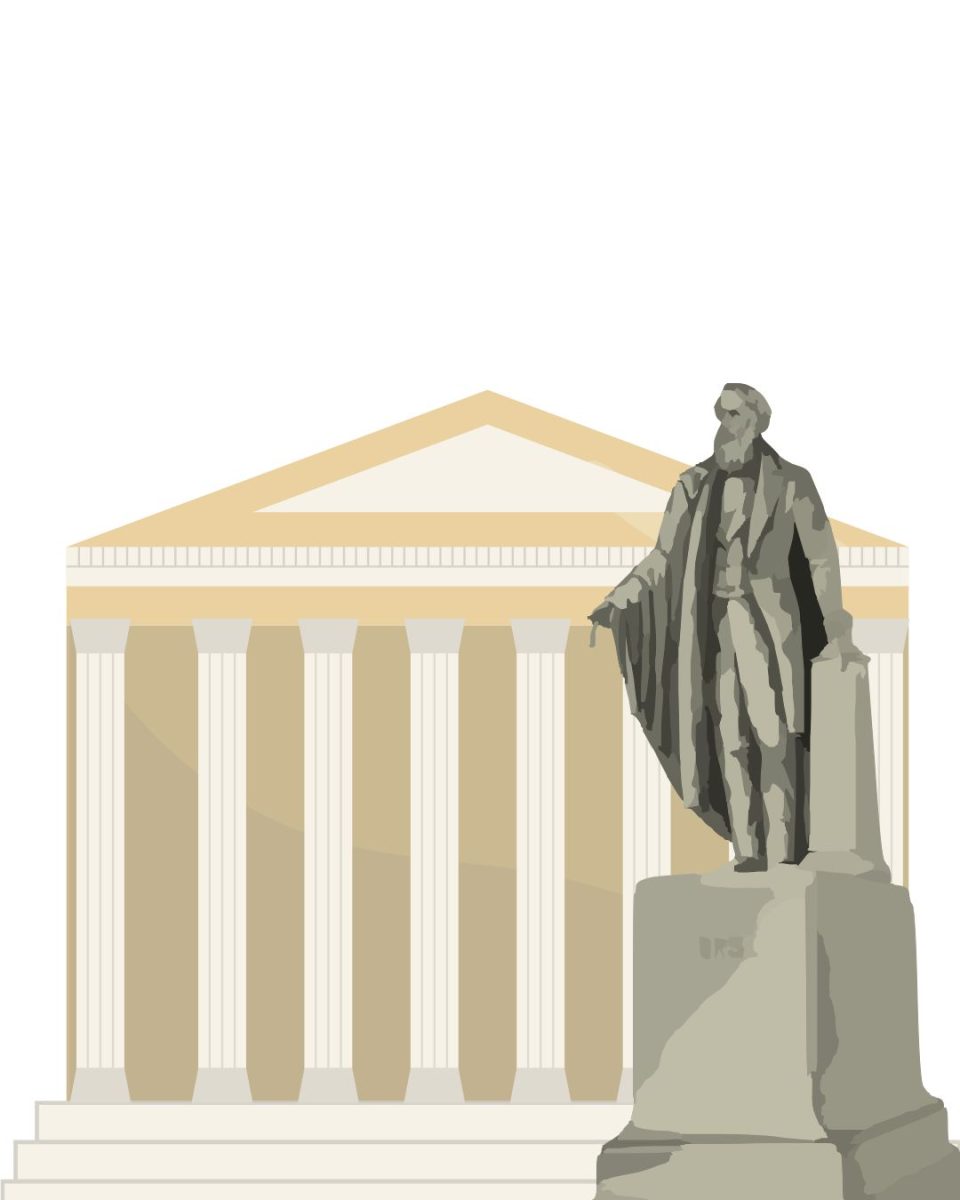
    "Art, literature, philosophy, history, and so on—we cannot abandon them." (Graphic via Canva)

    “Art, literature, philosophy, history, and so on—we cannot abandon them.” (Graphic via Canva)

    Life in our economy is hard. Everything’s expensive, and important systems like healthcare and higher education continue to rise in price while average income stagnates. So it makes sense to want a degree that guarantees a job straight out of college. 

    As a journalism major, I get it. My field’s job prospects only ever seem to get worse and worse. But as someone interested in art and philosophy, it can be brutal watching as humanities departments across America die. In some cases, they lose funding. In others, they’re shut down completely. 

    In May, the Trump administration cut staff by 65% alongside thousands of grants for the National Endowment for the Humanities. Nationally, student enrollment and academic employment continue to plummet. At the same time, STEM programs have done nothing except expand, mirroring both a changing workforce and a shifting social climate. 

    Here at Rowan University, while resources are more focused on enhancing STEM and vocational programs, rising operating costs and reduced state funding without increases in tuition mean humanities departments may be stuck with financial constraints. 

    Although no layoffs or significant cuts have happened, the humanities departments recently underwent a merger, creating the Ric Edelman College of Communication, Humanities & Social Sciences. This can be seen as a bad omen, as many universities merge departments and divisions due to financial difficulties. 

    The causes are diverse, but the most immediately intuitive change is the economy. Humanists often lack a direct, comfortable path from graduation. What’s an English or philosophy major going to do when they graduate if they can’t find a job in writing or academia? With no money and a mountain of debt, a degree like that doesn’t seem useful at all. 

    But STEM fields offer myriad career opportunities straight away. Most STEM jobs pay well, and job prospects are solid. And in an increasingly profit-oriented world, private universities are incentivized to move more and more towards job prep—not education for its own sake.

    This echoes a much deeper problem. Martha C. Nussbaum wrote in her 2010 book “Not for Profit: Why Democracy Needs the Humanities,” “Without the humanities, democracy itself is in peril. The imagination, sympathy, and critical thought they cultivate are essential for citizens who must see beyond their own local interests.” 

    In every sense of the word, she’s right. 

    While STEM builds bridges and helps robots to walk, the humanities underpin human culture, thought, and society. Art, literature, philosophy, history, and so on—we cannot abandon them

    These aren’t subjects we learn through experience. We can’t learn about historical materialism or Picasso or the ancient world just by walking down the street without humanists to educate us.  More importantly, the humanities are the foundation for logic, critical thinking, and reasoning. Those are skills necessary for everyday life and one’s career, no matter the field. 

    STEM fields have advanced humanity tremendously. But they lose any value if they’re applied without knowledge of history, an ethical backbone, or artistic beauty. In other words, if they lose their soul. 

    With the increasing power of the market over everyday life, we risk replacing the humanistic world we had with a cold, corporate monochrome. 

    Because of this, universities don’t play the same role they used to. The impetus of higher education was to learn and to be educated, which are the goals of a liberal arts degree. Now, they’ve become—as are many things in modern America—privatized, unaffordable tickets to one’s chosen career. 

    However, not everyone pulled the plug. Some colleges opt to fuse technical and business programs with elements of the humanities. Others continue to offer a humanistic education in its fullest form. Major universities like Harvard University, Yale University, and Cambridge University, alongside public universities, such as the University of Arizona and the University of Washington, maintain reliable humanities programs, indicating cuts aren’t happening everywhere.

    With the rise of adjunct faculty, jobs in academia, once filled by humanist professors and intellectuals, no longer pay the bills. However, the problem isn’t STEM, nor is it staffing or individual universities. It’s the economy, and the problems the humanities now face flow from this one source. Universities and students are making what they feel is the rational choice in neglecting the humanities. 

    Effective solutions don’t just treat symptoms; they treat causes, entailing something outside the market. In this case, government funding and regulation. 

    Leaving it up to universities to decide whether the humanistic world is worth it hasn’t worked. To fix this issue, we need far more federal and state funding for humanities programs paired with a return to full-time faculty, which means political reform that values more than just profit and economic utility.

    Ideally, better funding could spell a return to full-time work, as universities wouldn’t have to rely on adjunct faculty to scrape by, though for now, there aren’t many regulations to stop a university from using said funding for other purposes. This means labor regulation may also help.

    If we don’t reform anything, the humanities may not stick around for long, at least in the same form they’ve been in for centuries. While change can be a positive thing, in this case, I’m not too sure it is. 

    This deeply political battle for the future of education is an issue worthy of more attention than it gets. But regardless of what happens, good or bad, higher education will change by leaps and bounds. What matters is fighting for and hoping that this change is good.

    For comments/questions about this story, DM us on Instagram @thewhitatrowan or email opinion@gmail.com.

    Share on Facebook Share on X Email this Story Print this Story

    Tags: