by Aidan Vanhoof
Aug. 23, 2025
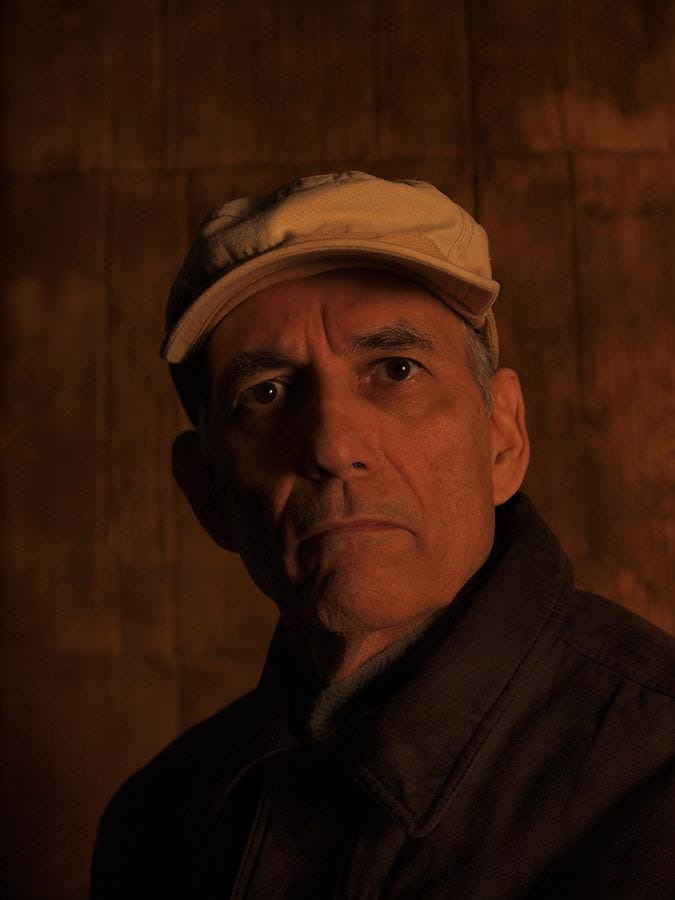
“A great man is not missed until you feel the loss of his greatness.”
-Juan Miguel Torres
My uncle — Juan Miguel Torres — was a truly great man. In March of this year, I visited some family in Florida. I’m not sure when or why, but at one point we started talking about my uncle, whom we call Ruben, and the life he’s lived. A life which, in the time I have spent on this Earth, I have grown to feel needs to be observed. Socrates said, “The unexamined life is not worth living,” and while I do not entirely subscribe to that idea I feel it is applicable here: Ruben was an incredible man whose life and work deserve to have, at the very least, a 20-year-old college student write about it— and absolutely more people than that should learn from it.
Since then, I’ve started researching his life. The stories I was told were amazing — stories of advocacy, altruism, and art. However, such stories can describe, but by doing so they only scratch the surface. I hardly knew him as a kid. He died when I was just 11-years-old. As a result, I can’t talk to him. Despite this, I would say that death merely turns a person from matter to memory. In this sense he is kept alive, and I hope through this essay of sorts that I can preserve and deepen this memory. Not just by repeating stories — which I do not dare undermine the importance of — but by exploring his art and his work as much one might explore his career and family life.
Ruben was born in 1947 in Barranquitas, Puerto Rico. Eventually, he would move to North Philadelphia at the age of four. Being the son of Latino migrants in the 1950s, he learned a good bit about resilience; and, with that, did not take from struggle a desire to further struggle, but a desire to cease struggle for others. Paradoxically, this would elevate him above most of his peers by grounding him alongside them. In other words, he embraced the challenges in his life. In this, he acted alongside them. Yet, he rose above those challenges and became a better person for it. In this, he acted above them.
He wrote in a private letter:
I tend not to be afraid of what the future may bring. I try my best to always tell myself that I am the master of my future. I am responsible for my future. I never allow myself to be a victim. If something happens to me… I don’t mope and crawl in a corner.
Struggle isn’t always something made to ruin, but to build. Just as in order to build muscle, one must first destroy it. To quote poet Charles Bukowski, “what matters most is how well you walk through the fire.” Some understandably don’t see it that way, but this small detail — that he didn’t let something as challenging as his circumstances stain the rest of his life — is a simple detail I admire. And it would help in defining who he became later in life, as I will hopefully display.
He spent his childhood immersed in the local Puerto Rican community, while he bounced between Camden and Philadelphia, the two cities across which his family was spread. When he was 17 he successfully fought for the construction of a much-needed public library in his neighborhood. He soon joined a series of Puerto Rican advocacy groups—Puerto Rico was poor, and its people faced prejudice and contempt: a radicalizing experience for Ruben. Then, he went underground, hardly talking to anyone. As it turns out, during this time he was active in a radical militant left-wing organization referred to as the National Caucus of Labor Committees—whom he joined following an event held by a front for the Communist Party. Outside the rally sat leftists of a rival organization—the aforementioned NCLC—who were polemicizing against the Communists. At the time, the NCLC was functionally a political party. It was these polemics that persuaded him to join.
While at Temple University, still involved with the labor committees, he worked as an editor for a bilingual newspaper. Eventually, juggling the two became impossible, and he stopped journalism, dedicating himself to activism. From then on, he agitated repeatedly against the Communist Party. In his notes, he describes “gang fights” with the Communists, one of which got him into legal trouble, motivating him to move away from Philadelphia and organize elsewhere. So he continued the struggle for years and organized across Albany, Youngstown, Chicago, Detroit, and New York, migrating from place to place. He lived a deeply chaotic life during this time—a lifestyle that would someday alienate him from his first wife.
As it turns out, the NCLC, led by Lyndon LaRouche, had developed a number of ‘cultlike’ tendencies, pushing Ruben to leave the NCLC in 1982. It had isolated Ruben from most of his family and friends, explaining his apparent disappearance. It seems like most of those I spoke to had little idea as to what he was doing during this time; it took reading private letters shown generously to me by his wife to know what went on. Everything I thought beforehand was just speculation. However, Ruben sustained a commitment to activism, writing in one of the aforementioned letters:
Those of us who have a deep commitment to make change start thinking we can change the world. As we get older and wise, we realize that it just ain’t so. But my heart is the same. My eyes moisten still when I see injustice and my anger still awakens. It’s the juice that keeps me centered and focused.
I’ve heard from my father that his more ‘radical’ leanings managed to land him on a no-fly list. This would make a lot of sense, even if it hasn’t yet been verified by anyone else: the NCLC was known for harassing FBI agents and had at one point been described by the FBI as a “violence-oriented Marxist revolutionary organization.” That’s no small deal. Strangely, I still respect what seems to be Ruben’s radical devotion to political change, even if he picked the wrong organization. Suppression is a badge of honor to any good activist or journalist. As what other reason is there to do anything of the sort except defiance? Truth is valueless unless it liberates — against power, against ignorance, or against fear.
In 1982, just after his exit, he became a bus operator for SEPTA (the public transit system in Philadelphia). He enjoyed it for its chaotic nature, swiftly rising in rank; at one point he managed two divisions (a role from which he got a few promotions). He was highly active in COMTO—an organization supporting minority workers in transportation. He remained high in rank until he left the transit business 22 years later.
Following this, Ruben dedicated himself to humanistic study: to the arts, philosophy, and history. He mentions at points in his letters how different he would have been, given he had stayed in the NCLC. We will never know, but we do know that his exit and subsequent studies made him the best version of himself. As a young man, he was angry and he was idealistic. He describes himself as a “Puerto-Rican Nationalist” a few times. But he matured, allowing himself to grow open-minded while keeping the same passion for politics that defined his earlier life. A desire to see a just world kept him going, his maturity kept him rational. He wrote,
I am too much of a realist to think that the world will conform to me but I am not that much of a defeatist to think that I will conform to the world.
Then, in 2003, he reunited with his high school sweetheart, Ann O’Donnel, and in that time he wrote hundreds of poems and letters to and about her. It’s clear to me, despite hardly having known him, that he loved her immensely. Some of his writing is readable on his website, all of it is beautiful and exhibits a tremendous love for her. In particular, his brief essay melting the snow. My favorite passage from it being,
many years passed. every year he could count the times that he felt a glimmer, like someone touching him on his shoulder, but he’d turn, only to find no one. a ghost of her no doubt.
In 2009, at the age of 62, he battled stomach cancer, which drove him in the direction of photography. He would join photography school and marry Ann that same year. It was between this time and his death where his photography flourished; thus, it seems, his creativity soared. In 2013, he was honored with the Medal of Courage Award and became an active member of the Power Over Cancer dragon boat team.
He died in 2016 when his stomach cancer tragically returned, and a few of his poems (and the quote below) reflected on death. In retrospect, they’re sometimes rather ominous, but this property only makes them more powerful. Take his poem aptly titled death:
i feel a creeping void
an unfilled part of me
being occupied
by a hollow nothingness.
a solitary movement
something barren
crawls up my legs
mesmerizing my nerves.
alone
i sense my death
my life has vanished
bare
without me.
deprived
destitute
i reach out
For my last breath
i yearn
but then
my life without me cries
how fruitless
how vain
or, presumably writing about Ann towards the end of his life, he wrote:
I can die now, darling, and I would feel that at least now I have no regrets. Imagine dying with my last thought being a regret over never having met you again, never knowing what became of you. So now, I smile, even with tears in my eyes, and appreciate the hand of God, what must have been a greater plan that sought to do right by us.
It’s grim, and that’s the point. But these poems and these quotes — when mixed with the overwhelming joy found in some of his other work, whether it be photography, poetry, or essay writing — add nuance. After all, there can be no joy in life without sadness and there can be no good in this world without evil — the same goes for art.
From his youth, he immersed himself in art. Art would feature itself everywhere in his life, in particular that of the impressionists. Van Gogh, Monet, Cezanne, Chardin, Vermeer and Rembrandt were his favorites. This love for art would never disappear, forming fundamentally who he was and who he became.
His journey in photography began later in life, but carried with it an impressionist edge: from his artist statement, “I photograph in a painterly style, determined not to rebel against representational or impressionist art but to utilize the art form’s fundamentals to continue to capture the inner essence and beauty of what I photograph.”
His wife, Ann, told me about his time as a photographer, saying, “He began his journey with photography after his cancer diagnosis. He took classes and worked diligently to perfect his craft. He would spend hours in the basement working on still lifes. He even had a few exhibits at a local restaurant and Penn Charter private school in Philadelphia. He donated the sale proceeds to the Cancer Support Community of Philadelphia where we were members. Juan was very generous and kind that way. He always gave more than he took.”
Art isn’t just abstract ‘expression’—it’s living as per who you are: as the most powerful form of expression will always be one’s own actions. In this way, he was an artist in the purest form. His photos were a privilege to observe, but just as much a privilege even for those who could not see them. As he ensured that whatever he could do for others, he did. He was a man whose life was nothing except an expression of himself and his ideals: not only his emotions or innermost feelings, but his values and beliefs about how the world should be.
He was also a prolific poet, and armed with a profound style of prose, he would fight for, and, thus, live according to, what he believed in. His poetry and few essays (my personal favorite being as she pushes to be free) are both powerful and beautiful. Some passages, too, from unpublished letters, lend a deep philosophical edge to his writing — passages like this:
In our arrogant youth, we rebelled against fate’s plan and we now feel the pain of that decision. Now fate leaves us to ourselves, leaving it up to us to decide. So you ask what now? Yes, what now is the proper question. The answer will unfold just as easily as the question asked. Only, the question will unfold slowly and when it does, acting on it will be the challenge.
I chose this quote initially because of its decisively existentialist flavor, mirroring Sartre’s “Man is condemned to be free; because once thrown into the world, he is responsible for everything he does.” But besides this, the prose is something more powerful than anything most people (especially me) could possibly write. Within 71 words he summarizes, both in form and in syntax, a profound philosophical concept: if we decide what to do with our lives, then the question of “What now?” is arguably the most important, and the first thing, we can and should ask.
It seems to me like almost everything he did was done in accordance with this maxim. He did not by any means waste the life he had. It is this life — a life guided by principles, ethics, creativity, and beauty — I’ve grown to admire. I’d like to end this brief essay with one more of his quotes, which I feel encapsulates his philosophy in life:
You can’t live your life by yourself simply because life is much more than yourself. Life is you and the people around you. It’s what you think of yourself and what you think of others. It’s giving to yourself and giving to others as much as it is taking from yourself and others. Life surrounds no one person but envelops one whole people.
A person’s life — no matter how much money they make, how athletic they may be, or how famous they’ve become — is seldom complete until they’ve loved and they’ve been loved. Meaning accompanies one’s friends, family, and peers at the hip, and comes from few other places. Love, in the myriad forms it takes, is everything. Ruben knew this and thus lived a profoundly meaningful life — a life I hope to replicate in my own way.
Ruben was a beautiful person who left joy in his wake. He was, and remains, an example to us all. I wish I knew him better, but I’m glad nonetheless that I’ve had the opportunity to learn who he was. He lives on in memory, as we all will someday.
Information about Rubens life was pulled from the website Ann made for him following his death (theycalledmeruben.com), his obituary, testimonials, and private notes/letters. All pictures are either Ruben himself or taken by Ruben.
Have a lovely day.
If you would like to read the fully formatted essay with pictures, here is the Google Docs link: https://docs.google.com/document/d/1EDvpsWffG-GCGJFy0Z71WZFC_qyJ-Pf032XCrd-yg_M/edit?tab=t.0
 Aidan Vanhoof
Leave a comment