9 min read
Aug 22, 2025
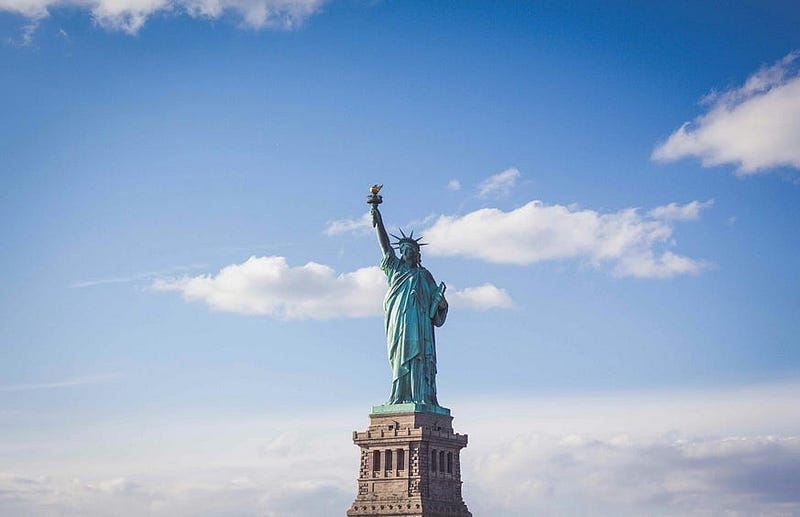
It seems like ‘freedom’, maybe the most abused term in politics, is practically undefinable.
Each ideology has its own definition of the word. Two of the top 10 most powerful conservative organizations are named after it. Even those that don’t do so still use ‘freedom’ as an ideological mainstay: The conservative organization Club for Growth describes itself on its home page as “limited government Americans who share in the belief that prosperity and opportunity come through economic freedom.”
On the opposite end of the political spectrum, even communist organizations like the RCA write on their website, “In the words of Engels, it will be the ascent of humanity from the kingdom of necessity to the kingdom of freedom…”
One defines freedom as intrinsic to a free market; the other, as exclusive to communism. This tells me two things: What freedom means is a semantic game, and each values freedom in some way.
To the conservative, freedom is a technical, legalistic freedom, one brought by limited government and a respect for human rights. Freedom comes at a cost — often monetary. To leftists, freedom is something slightly more abstract: from the same sentence as above, the RCA continues:
…from a world in which the vast majority of humanity is relegated to the mere struggle for survival to a world in which each individual can realize their full intellectual and creative potential as we collectively chart the course for the future of our species.
Vladimir Lenin distinguishes between two types of freedom: formal (bourgeois) and actual (proletarian). Formal freedoms appeal to the capitalist. They’re legalistic, technical. Actual freedoms are the more abstract, existential, left-wing freedoms — freedoms that promote human flourishing above all, as opposed to providing the opportunity thereof. Both are interdependent: a society can’t abandon either, or else it risks falling into capitalist inequality and communist authoritarianism.
Both types are the basis for most modern ideologies: even the most authoritarian of leaders tried looking free. Stalin wrote,
Real liberty can exist only where exploitation has been abolished…
Hitler himself said in a 1922 speech,
We recognized that freedom can eternally be only a consequence of power…
Each center themselves around an abstract concept of ‘freedom’, with the end goal of redefining freedom along ideological lines. And, each wants the elusive actual freedom while failing wholly to fulfill. However, while these dictators stripped their people of formal freedoms, even those may be pointless if they lack sufficient systemic support.
Let’s take the modern day United States: while we might technically have a free press, 90% of the American media is run by just 6 major corporations, meaning each one distorts information and manipulates us on a regular basis in their favor. And, such policies are meaningless to the over 700,000 homeless people starving on the streets, living off of scraps gifted to them by those passing by; to the 45,000 people who die each year because they can’t afford basic healthcare; to the over 149 million people in the United States struggling to meet basic needs, like food, housing, and transportation.
Freedom means nothing if it exists in a broken system. The conservative organizations listed above who exploit the term, through economic deregulation, caused most of the problems we’re stuck with now. While the masses starve and the rich grow richer, society supposedly grows freer.
I must ask you, does this really look like a free society?
Thus, while formal freedom is important, it’s not everything. Actual autonomy must be realized existentially, not just technically. Philosopher Jean-Paul Sartre realized this, arguing that people remain obsessed with income and the burdens of life, which keeps them held back as individuals and prohibits them from living their fullest, most meaningful lives.
We may have a limited state, as in we lack a monarchy or dictatorship, but we remain enslaved to an exploitative division of labor, to the whims of the market and the dictates and ideologies of oligarchs. The market still rules with an iron fist. Sartre wrote in Materialism & Revolution,
History has shown that no individual liberation is possible while men remain enslaved by an economic system which exploits them. Freedom demands a collective transformation of society.
Lenin recognized this, inspiring the two types of freedom defined above. He and Sartre were alike in believing that a collective liberation only came with the death of competitive, oppressive bourgeois society and its false notions of liberty. To both, the end of capitalism would realize an entirely new form of freedom.
They were wrong. Sartre migrated away from Marxism later in life, Lenin died before hopes of his communist utopia collapsed beneath Stalin’s brutality. Formal freedom is a necessary prerequisite for actual freedom. But the end goal of bringing about a sort of ‘freedom of the soul’ is nothing except noble, honest, and authentic. As every person’s desire to live, their driving force, comes from a different point. We are all unique in that way, so we need the freedom to navigate to that point, guaranteeing each person can live the best possible life.
We may have faced the Soviet Union, but paired with our ruthless Cold War corporate imperialism, whether it be Guatemala, Chile, Vietnam, Iran, Argentina, and so on, we were no protagonists. We were the villains. Yet we claimed to be ‘spreading freedom’. For liberty to be ‘righteous’ like Americans think it is, we need actual freedom because it ensures freedoms only exist insofar as they contribute to basic human flourishing — an objective that should be the only goal for any given state structure. As what other purpose does the state serve except to ensure the wellbeing of its people? Any other purpose turns a state structure into unnecessary over-regulation — in other words, oppression.
But freedom still needs to be defined. This essay may not make waves, but perhaps only for personal reasons, it’s important that ‘freedom’ be given a definition, because what freedom is colors the rest of a given ideology.
Humans are social beings to an extreme extent, as we are dependent on each other. Not only dependent on each other to accomplish a goal, like cleaning a yard or getting a ride somewhere. Without community, some people may even lose their will to live.
Meaning and purpose in life, which give us a reason to live beyond biological impulse, are healthily married to the social world. Ideology and religion give us a will to live so strong we paradoxically offer ourselves to die for it. We dedicate our lives to causes, thus those causes become our lives: the cause supersedes our existence.
The communist revolutionary dies for the cause in the hopes that the revolution will live on after him, the religious zealot sacrifices themselves and lives after death, and so on. This drive to live on after death via our impact on the world is called the “death drive.”
Both psychology and philosophy help explain why and how this death drive is social. In particular, Lacanian psychoanalysis and Hegelian philosophy.
To Lacan, identity comes from our relationship with the Other (another entity, whether social, constructed, imagined, or anything else) and an obsessive impulse to please them. We project an identity and personality shaped by how we think the Other wants to see us. In other words, we want to satisfy the Other, and we go to extreme lengths to do so. It’s a perpetual people-pleasing inauthenticity. Even ideological systems, like Marxism or Christianity, can be understood through Lacan, as God gives a gaze from which we can gain approval, or the revolution gives one a system through which they can feel recognized within the revolutionary framework — every action they do is by default validated, given it contributes to the cause.
In Hegelian philosophy, humans are driven by a desire to control how they’re seen and how the Other sees them. This compulsive need to control our social environment forms the foundation for Hegel’s philosophy, which he called the Master/Slave Dialectic. One subject, the slave, recognizes another; the master is the recognized. But in the process of recognizing, the slave labors, refining their identity and actively subverting the master, at some point becoming the master themselves. It’s a human urge to control. To have a hand in whatever affairs are consequential to them, and the way it often aggravates the other party, ensuring a constant and unending battle for control. Our lives are dictated by our relationships with other people. While his philosophy is best applied to politics, it’s fundamentally a psychological concept, one echoed and made far more sophisticated in psychoanalysis.
Anthropologically, humans can’t survive without this impulse to please and control, which also explains their origins. Before agriculture, humans lived in nomadic communist groups kept together by mutual aid. If I needed food or clothes, I’d receive them under the assumption that I’d someday return the favor. Normally, the favor was returned. Humans are born with ethical intuitions like empathy and pity. Some ethical theories like non-cognitivism base ethics as a whole on emotion and impulse. Without this, which allowed us to hunt and survive despite lacking basic natural defenses, we’d have gone extinct long ago.
In some philosophical traditions, particularly Nietzschean philosophy, each person is seen as selfish. For example, we only act collaboratively for self-preservation, only do charity to feel good about ourselves, self-sacrifice to live on after we die. But in the end, we still find ourselves dependent on other people, even if that dependence is a deep-rooted selfishness. We are selfish, but by being selfish we become altruistic. While this calls into question the idea that selfishness is intrinsically bad, it fails to dissuade human nature — a nature psychologically dependent on other people.
Human psychology is thus predisposed to unfreedom. We live subservient to the Other and to be dominated, ironically so we can dominate — over death and over identity. But this doesn’t mean freedom is impossible. Only that the libertarian, individualistic version of freedom is. We must redefine freedom as a collective pursuit and one originating from a fundamentally unfree spot.
At first glance, the Leninist route would make sense. After all, the main idea of Leninist collectivism is freedom through collaboration. But Lenin rejected formal freedom outright in favor of a temporarily authoritarian revolutionary government in transition to communism. To him, such freedoms, because they failed in serving the working class, apparently weren’t necessary.
But, psychologically, we still need formal freedom. We are a deeply tribalistic species; in that, we choose over and over again the group that makes us feel recognized and cling to that group as tight as possible, shaping our identity according to our in-group and against the out-group. Leninist communism hopes to achieve freedom through community. But in the process of creating a mono-culture — the single community, the collective — communism dismantles the freedom to choose what group one belongs to, and forcibly immerses them into a single group. Without a choice in groups, those who may not fit in properly remain alienated, losing a sense of meaning and purpose because they haven’t discovered a community that fits them. In the end, the communist mono-culture fractures. People have different desires, different needs and hopes in life. This leads to different but weakened tribes and a shallow, tense, totalitarian society.
Proletarian, actual, existential, freedom first requires bourgeois, formal, legalistic freedom. To be free, a society must give its people the ability to join whatever groups and organizations they may wish, that means refraining from ideological oppression of any kind. All of this, in the end, is to achieve the ultimate possible existence: to allow the people to live their best lives.
Therefore, I will define freedom as follows: Unconstrained thought, expression, movement, and choice in group and identity; i.e., the ability to live an ideal life according to one’s most authentic nature without external constraints.
This definition aims to synthesize the formal and the actual. Neither can exist without the other. This is where the state structure and economic system — in other words, ideology — is important. I’ve already dismissed capitalism, I’ve already dismissed communism. But capitalism manifests across both the right and left wing. Social democracy, while it’s certainly a milder form of capitalism, doesn’t do much to stop economic imperialism and intensive exploitation; and both problems are natural symptoms of a free market. This should tell us that a free society shouldn’t have a free market. Instead, a democratic, planned economy — one in which those previously exploited now control their state, their economy, and access to their needs; i.e., what communism aimed to do — is the most free. In other words, democratic socialism.
 Aidan Vanhoof
Leave a comment