5 min read
Jul 13, 2025
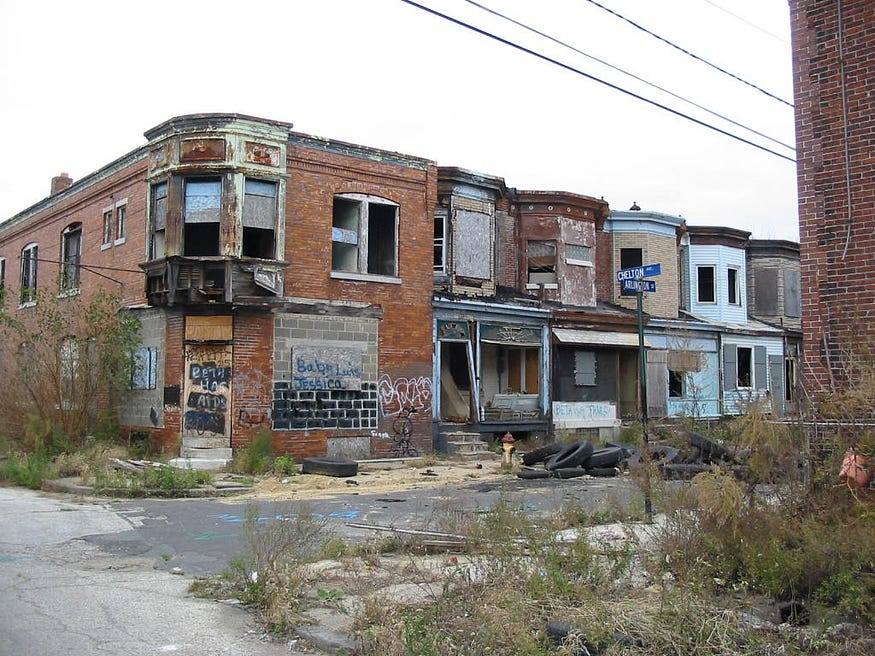
We walked through the food bank and into the main room : a small, gray cafeteria, with cement floors and tables decorated with colorful place mats and cheap plastic tablecloths. It was a tad chaotic as people came and went through the garage that led to the front. Outside sat Camden, NJ: a place dauntingly different from my comfortable suburban life just a few miles to the East.
We prepared to volunteer for and provide a dinner for a solid number of homeless men. Despite their condition, they’re consistently kind, grateful, and sweet to us. Perhaps some have done bad things, but all I know of is their respect toward us.
I’m by no means a perfectly moral person. I’m no master of ethics and altruism who’s worthy of praise. I hardly even volunteer as much as I should. But my few experiences working with those men have been anything but unenjoyable.
My fellow volunteers mostly came from a Catholic Parish near where I live. In fact, I’m almost certain I was the only atheist among them. But even though God was with everyone except me, I found something greater than religion. Not the obnoxious sounds and sights of a nondenominational church or the liturgical warmth of a Catholic Church; not a fleeting euphoria I’m told is the ‘Holy Spirit’. Nor did I find what I thought I’d find: some unpaid labor that’d feel rewarding in the long term.
Not to sound corny, but I found my own God: what any good existentialist would call meaning. Maybe not a cosmic purpose, but I’m beginning to think this ‘meaning’ is only more powerful: it’s more direct, personal — more real.
I’m of the belief that meaning — a reason to live beyond biological impulse — originates in struggle. It’s something we decide, without something commanding us to fight for it and seek it out. It’s a struggle we aren’t thrown into by a pessimistic universe, but a struggle we’re thrown into by our own will. We don’t derive meaning from a flood trapping us in our house; but we derive meaning from chasing the storm or rescuing people from it, even if the danger is the same. We don’t derive meaning from walking down a street and watching as people protest; but we derive meaning from walking down that street in the same fashion, but protesting, shouting, feeling as if we are making a difference.
What is remarkable is what is meaningful. A miracle would be lame if not for its defiance of natural law, a life would not be meaningful if it were not temporary. In the same sense, we live our whole lives on Earth, taking in our surroundings and living with other humans. When we decide, we choose a path among infinite alternatives, thus we make an exception: that which we decide makes an otherwise neutral, meaningless existence meaningful.
When I work in Camden for no pay, it’s not necessarily because God compelled me. If that were the case, I would have a reason to do so commanded to me. But if I have no reason to do so beyond what is basically ‘whim’, I’m making a decision by my own will — neglecting of course the more deterministic aspects of life, like my subconscious mind or the external world. If I am making this decision, I am not following, leaving it to another to define me — but I am defining. I am defining myself by my own actions, therefore, by definition, making my life meaningful by my own actions.
This ‘spontaneity’ is an anxious experience: one feels condemned. They are responsible for what they do. There is no cosmic father-figure to pull you out of a rut. You and you alone can do that. Philosopher Jean-Paul Sartre famously said,
Man is condemned to be free; because once thrown into the world, he is responsible for everything he does. It is up to you to give [life] a meaning.
So when I work in Camden, it’s not necessarily for any moral virtue baked into me. I would say this goes for most people, though maybe I’m a bit selfish. People often do what is right in order to avoid an emotional deterrence, or condemn for the sake of empathy. In this case, it’s the urge to do something meaningful. To love a stranger as if I knew them personally — that’s a powerful experience, and, in a way, a high.
And, it’s peaceful: the anxiety that terrorizes me, whether clinical or existential, is eased. I’ve made a decision, and it is in turn gifting me meaning. A meaning that comes from my helping other people as a member of a communal species (as Lacan said, “The I is always in the field of the Other.”) and a meaning that comes from something deeper. This, in a way, is the atheist’s loving God: rationality and decision-making: the cosmic order of the universe. We atheists are moral without a foundation. We don’t need one. We have ourselves, and as unreliable as it may seem, I would say morality is the greatest way to cope with a silent, terrifying, violently negative universe.
Arthur Schopenhauer — among the most depressing, pessimistic philosophers ever, who believed the best thing one could do for their kids is ensure they have no hopes in life in order to avoid disappointment — thought so, saying,
Compassion is the basis of morality.
As what else but kindness can free us of such an otherwise horrible existence? If we are to rise above it and defy a dead universe by giving it meaning, we are to redefine a horrific universe by bringing it beauty. That in many ways is the key reason for the success of religion. But it’s taken us thousands of years to realize that this religion is composed only of other people, thus, why not make that religion other people? The death of God has brought a new age of compassion, an age of empathy without force. The world may be more cold, yet we are now free to respond to it with warmth.
 Aidan Vanhoof
Leave a comment